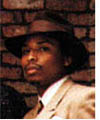
| Jacques
Fred Petrus (1948-1987)
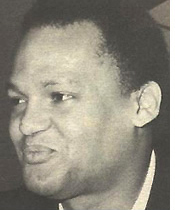 Jacques
Fred Petrus is one of the greatest and maybe also one of the
more ruthless business forces in the late 70s and early 80s
dance music. From just being an ordinary record collector at
first he became a self learned and skillful executive producer
with an own musical empire under his sleeve that he maneuvered
in a very clever, firm and determent way from 1978 to 1987.
For this achievement and the amazing music that came out from
his Goody music/Little macho production companies he has to
be admired. Petrus had also an impressive hit feeling mixed
with fundamental knowledge about trends in dance music, a knowledge
that he had earned during his many years as a DJ and record
dealer in the 70s. All this combined spiced up with good timing
and a bit of luck made it possible for him to achieve a great
amount of musical and commercial worldwide recognition and success.
Petrus was also a highly controversial person that from time
to time showed a very dark and grim side as a part of his mysterious
double nature. His way of handling things, especially during
the last years of life even made people hate him and see nothing
else than evil in his mind. Jacques
Fred Petrus is one of the greatest and maybe also one of the
more ruthless business forces in the late 70s and early 80s
dance music. From just being an ordinary record collector at
first he became a self learned and skillful executive producer
with an own musical empire under his sleeve that he maneuvered
in a very clever, firm and determent way from 1978 to 1987.
For this achievement and the amazing music that came out from
his Goody music/Little macho production companies he has to
be admired. Petrus had also an impressive hit feeling mixed
with fundamental knowledge about trends in dance music, a knowledge
that he had earned during his many years as a DJ and record
dealer in the 70s. All this combined spiced up with good timing
and a bit of luck made it possible for him to achieve a great
amount of musical and commercial worldwide recognition and success.
Petrus was also a highly controversial person that from time
to time showed a very dark and grim side as a part of his mysterious
double nature. His way of handling things, especially during
the last years of life even made people hate him and see nothing
else than evil in his mind.

Petrus
liked exclusive cars. In the early 80s Petrus bought a BMW 733i,
a car that Mic Murphy often kept "warm" when Petrus
was in Italy.
Even
though Petrus was the main figure of Goody music/Little macho
it's very important to understand that Petrus was not a one-man-circus.
With just a few exceptions he never composed, arranged or produced
the music himself at all, even though he wrongly did take credits
for that on the albums. He did however set up the musical guidelines
for the music and had always the ability to approve or disapprove
what he heard. In that respect Petrus was the creator of the
music, but hardly more than that. It was his close Italian co-workers
of Mauro Malavasi, Davide Romani, Paolo Gianolio and a few others
that took care of that process and were the real forces behind
the musical achievements. Without them and the highly talented
and regarded hired personnel of musicians, vocalists and lyric
writers together with skillful and accomplished studio personnel
he would just have been a man with a great hit feeling but just
with big dreams!
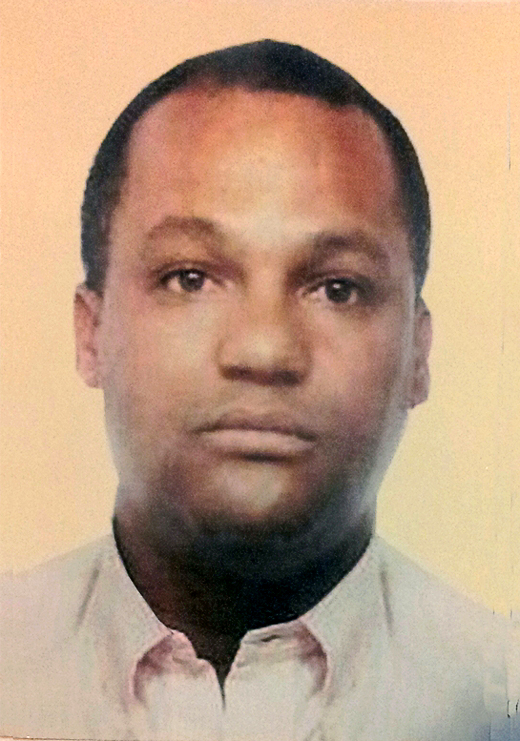
Passport
photo of Petrus taken in 1984, just three years before his death.
The passport says that he is 180 cm long. And his profession
is in this document stated as "Gérant de sociëté",
chief of a company.
The
early years
Jacques Fred Petrus, or just Fred Petrus as he most often was
called, was born on the 22nd of February 1948 in the village
of Saint-Anne on the small island of Guadeloupe in French west
India that is located in the Atlantic Ocean outside South America.
Both of his parents are from Guadeloupe and they are descendants
from slaves brought in from Africa to work on sugar plants.
The family have a long history on the island and the first known
member that used the family name was Pierre Petrus (born circa
1830). He became a free man in 1848 when the slavery was abolished.
Petrus family history is in no way unique. It is more the ordinary
genealogical résumé of all Black people on the
American continent, from Argentina to Canada. Petrus was dark
skinned but not black and had a Creole or Mulatto origin. The
mulattos were a mixed population of black (slaves) and white
(slave owners) that represents 77% of Guadeloupe's population
today. The island it self has been under French rule since 1814
when the Swedish king Karl XIII was forced to hand it over to
the French. Ever since Christopher Columbus "discovered"
Guadeloupe in 1493 the small island has been a part of a power
struggle between mainly British, French and Spanish political
and military interest. But after the short Swedish period between
1813-1814 a long and more stable period under French rule began.
Even though slavery was abolished in 1848 the situation was
still harsh for most people. It wasn't until the 50s and 60s
that the people of Guadeloupe slowly  gained
political consciousness towards independence, a thing that they
until this day have failed to reach. Despite this grooving political
turmoil Petrus was also brought up in a land with plenty of
natural resources as Guadeloupe exported sugar, bananas, cocoa,
coffee and vanilla. But it was foremost a sleepy part of the
planet, more or less a "banana state", with the tourist
invasion yet to come. Early on music became an important part
of his life. He was a passionate collector of the latest R&B
and soul records in the early 60s, music that had a profound
impact on his entire life and later profession. While dreams
of making his own music occupied his head reality reminded him
that he got to work to make a living before that could happen.
Consequently Petrus passed some kind of mechanical school before
he in 1964, only 15 years old, left his home and became a diesel-engine
mechanic on a cargo ship. From now on Petrus restless soul moved
from corner to corner on the face of the earth always searching
for new projects and challenges. He stayed in the cargo fleet
until 1966 and in 1968 he suddenly popped up in Paris as a DJ,
the music had finally taking over. In Paris, where he stayed
for two years, he first worked at the club François Patrice
St-Hilaire and then White Chapel, situated at Place
Mabillon. During the summertime he worked as a DJ both in Sicily,
Italy and later legendary Tifanie's in Marbella, Spain.
About 1969 he moved to Milan in Italy. Three brothers and his
cousin Claude joined him in Milan during the 70s. Italy became
from now on his main base and his brother Alex, that joined
him in 1975, became his most trusted and helping friend until
his death. gained
political consciousness towards independence, a thing that they
until this day have failed to reach. Despite this grooving political
turmoil Petrus was also brought up in a land with plenty of
natural resources as Guadeloupe exported sugar, bananas, cocoa,
coffee and vanilla. But it was foremost a sleepy part of the
planet, more or less a "banana state", with the tourist
invasion yet to come. Early on music became an important part
of his life. He was a passionate collector of the latest R&B
and soul records in the early 60s, music that had a profound
impact on his entire life and later profession. While dreams
of making his own music occupied his head reality reminded him
that he got to work to make a living before that could happen.
Consequently Petrus passed some kind of mechanical school before
he in 1964, only 15 years old, left his home and became a diesel-engine
mechanic on a cargo ship. From now on Petrus restless soul moved
from corner to corner on the face of the earth always searching
for new projects and challenges. He stayed in the cargo fleet
until 1966 and in 1968 he suddenly popped up in Paris as a DJ,
the music had finally taking over. In Paris, where he stayed
for two years, he first worked at the club François Patrice
St-Hilaire and then White Chapel, situated at Place
Mabillon. During the summertime he worked as a DJ both in Sicily,
Italy and later legendary Tifanie's in Marbella, Spain.
About 1969 he moved to Milan in Italy. Three brothers and his
cousin Claude joined him in Milan during the 70s. Italy became
from now on his main base and his brother Alex, that joined
him in 1975, became his most trusted and helping friend until
his death.
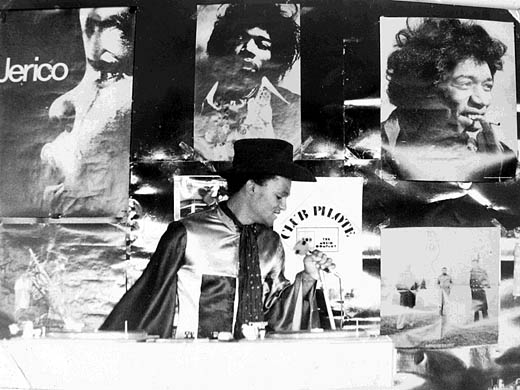
A
unique picture from Petrus days at "Club Pilote" in
1969 sent as a post card
to one of his relatives in Guadeloupe.
The
Italian job - building up an organization
In
the prosperous town of Milan in the northern parts of Italy,
world known for its extraordinary and ancient culture as well
as a top of the art fashion business Petrus started to work
as a DJ at the club Good mood in 1969. But the salary
was low and Petrus understood that he couldn't make a living
just as a DJ all his life so he began to import records from
the US. He had contact with a company in the US that was specialized
in records for discotheques. This move was going to change his
life. Initially the quantity was limited to two packages per
week, mainly because he didn't have the money to buy more records
for, but it was nonetheless sufficient. Together with some DJ
friends he started to sell them to the big discotheques like
Nepentha and Charly Max in Milan and the business
flourished. This whole idea was a rather new phenomenon at the
time but innovative and gave Italy new influences in a way never
seen before. Sometimes he also sold to local visitors by the
premises that they hardly could find such exclusive records
anywhere else except in US.
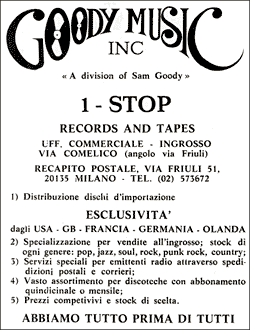 Before
his first productions, Petrus sold records via his Goody Music
store placed in Milan. This Goody music ad was often seen in
many Italian music magazines during the late 70s. Before
his first productions, Petrus sold records via his Goody Music
store placed in Milan. This Goody music ad was often seen in
many Italian music magazines during the late 70s.
This
particular ad was published on the 25th of September 1977 in
"Ciao 2001" that was one of the best known weekly music magazines
sold in Italy spanning from 70s to 80s.
In
short it says that Goody music are a distributor of imported
records from USA, GB, France, Germany and Holland. They sell
with competitive prices and by many different genres to privates,
Discotheques and radio stations. They also claim to have everything
before anyone.
After a detour to Rome in 1972 and the club "Staco Matto",
Petrus was back in Milan in 1973. He felt that he needed a more
organized structure of his business and that eagerness made
him to create the "Goody music" firm in Milan
(see add above; the address was Via Friuli 51/1; after 86 the
address was used by the important Italo music record company
Full time productions, later renamed London Street) that
was the first music shop in Italy specialized in importing and
selling Disco music records from the US. The Goody Music
shop was a division of the big American record shop chain established
by Sam Goody in 1951. Petrus managed during the following couple
of years to expand the number of Goody Music shops through out
Italy building up an economical and social fundament for his
next step to produce and record his own music. Petrus was one
of the biggest pioneers in Italy as an door opener for Disco
music.
He was not alone to import records from the US however. There
were two other import shops, Carù and Ronchini in Parma, but
they were not interesting in the Disco genre as they thought
it was yet to uncertain to put any major effort in. Petrus was
bold and innovative and never afraid of taking risks though.
He just moved on as he certainly believed in this kind of music
and it later showed to be exactly the right decision.
Evan
though Petrus' main work in the mid 70s was to import and sell
records he did also work as a customer assistant in one of the
two highly trendy Fiorucci fashion stores in Milan. Fashion
and music was like today closely connected, so it was a logical
choice. Even more important than that was Petrus work as radio
DJ at the Radio Milan international radio station that was the
first Italian private radio station. It's said that Petrus also
was one of the first persons to join the station in 1975. Petrus
seems also been an economical contributor to the radio station.
However, after a shorter period of time he was forced to leave
after a furious quarrel with one of head officials of the station
due to economical disagreements. Petrus and economy were two
things that to a large extent were incompatible. His ability,
or more correctly, his lack of that when dealing with economical
issues was something that followed him through his entire life
and later caused him much more difficulties than this quarrel
did.
Petrus
and Malavasi - The magic begins!
 During
these experience and learning years Petrus had always new ideas
and dreams popping up now and then. One of them was to produce
his own music instead of just providing other artists stuff,
a thought he had nourished for a long time and step by step
was getting closer to. In 1975, or 1977 according to other sources,
he made a lucky strike when he met a young Italian musician
called Mauro Malavasi (left). That meeting with this highly
talented young kid resulted a few years later in a remarkable
and rarely seen success on the dance music scene! Malavasi,
that was born in Bologna in 1958, was at the time a student
at the music conservatory in the same town (Conservartorio
di musica di Bologna). Malavasi had during the early 70s
educated him self at the conservatory in the composition, choir
and orchestral disciplines. He also became a masterful piano
player during these years and played jazz in different bands
now and then. All the studies at the conservatory were in fact
financed by Petrus of unknown reasons. In
1977, just one year before his first musical project with Petrus
and only 19 years old, he and a his friend Marzio Vincenti,
that was a friend of Petrus as well, produced an album under
the name of Marsius (Vincenti's alias) entitled "Save the
tiger" but without reaching any commercial success. Although
Malavasi had a classical education both Petrus and Malavasi
headed towards disco music. In 1978 they started a production
company in Milan named "Goody Music Productions" (GMP)
with the profit from the import shops as an economical foundation
and using the same name as Petrus' firm. This was good start
for their ambitious plan to conquer the world market of Disco. During
these experience and learning years Petrus had always new ideas
and dreams popping up now and then. One of them was to produce
his own music instead of just providing other artists stuff,
a thought he had nourished for a long time and step by step
was getting closer to. In 1975, or 1977 according to other sources,
he made a lucky strike when he met a young Italian musician
called Mauro Malavasi (left). That meeting with this highly
talented young kid resulted a few years later in a remarkable
and rarely seen success on the dance music scene! Malavasi,
that was born in Bologna in 1958, was at the time a student
at the music conservatory in the same town (Conservartorio
di musica di Bologna). Malavasi had during the early 70s
educated him self at the conservatory in the composition, choir
and orchestral disciplines. He also became a masterful piano
player during these years and played jazz in different bands
now and then. All the studies at the conservatory were in fact
financed by Petrus of unknown reasons. In
1977, just one year before his first musical project with Petrus
and only 19 years old, he and a his friend Marzio Vincenti,
that was a friend of Petrus as well, produced an album under
the name of Marsius (Vincenti's alias) entitled "Save the
tiger" but without reaching any commercial success. Although
Malavasi had a classical education both Petrus and Malavasi
headed towards disco music. In 1978 they started a production
company in Milan named "Goody Music Productions" (GMP)
with the profit from the import shops as an economical foundation
and using the same name as Petrus' firm. This was good start
for their ambitious plan to conquer the world market of Disco.
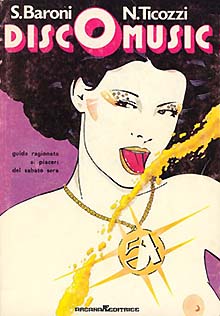 A
very rare Italian booklet featuring an exclusive interview with
Petrus in 1979. Petrus describes in a very self confidant way
his early years and the first success with Macho and Peter Jacques
band. A
very rare Italian booklet featuring an exclusive interview with
Petrus in 1979. Petrus describes in a very self confidant way
his early years and the first success with Macho and Peter Jacques
band.
The small business was located on Via Pietro Mascagni
15. Their goal was to be the new (Italian) Gamble & Huff, well
known and successful producers at that time. Even though that
didn't happen they manage to create a successful mix of European
and American style of disco into something partly new and astonishing
for the world. Their style was a part of, or creators of, the
genres "Spaghetti disco", "Italodisco"
or "Eurodisco". Disco its self, as a genre,
ruled the world from the mid to late 70s and everybody, whether
your name was Blondie or not, wanted to release at least one
disco album. Fred Petrus and Mauro Malavasi were no exceptions.
By style the disco tracks were characterized by catchy, harmonic
and highly danceable melodies included on ridiculously extended
versions, often more than seven minutes that had one or more
funky breaks that lasted forever. It was in this ocean Petrus
and Malavasi wanted to show the other fishes who was the mightiest.
From
disco to pop
Even
though disco was the main influence at the beginning the musical
language of the productions changed over time. Therefore can
all the music that was released from Petrus and Malavasi's empire
be divided into three periods.
- Until
1981 disco ruled their sound, and that period was the first
one.
- In
1982, and even more in 1983, their compositions became denser
with an R&B and popfunk oriented and more groovy sound.
That change was much due to the more extensive use of black
American songwriters at the expense of the use of Malavasi
and Romani. It also reflected the less use of the slightly
out dated disco style music.
- The
third and final period came at the very last minute in 1985
when the sound of Little Macho was consumed by the strong
waves of watered down pop and synth music that the record
companies and most of the radio stations now gave their fully
attention to.
Besides
these three musical periods Petrus and Malavasi went through
two phases based on commercial success as well, the building
up and commercially moderate period between 78 and 79, and the
most successful period between 80 and 85.
The
great Italian musicians!
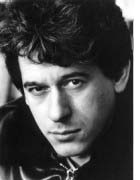 Besides
Malavasi Petrus also got to know other Italian musicians that
became important key figures in the Petrus/Malavasi dream. One
of the most important and well used of them was self-learned
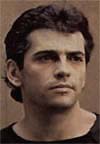
bass guitar player Davide Romani (left) that was introduced
to Petrus by Marzio Vincenti in 1977. Just like Malavasi Romani
was also just a young kid. He was born in the small town of
Ferrara in 1959 and was at the time only 19 years old without
any experience in disco music. At first Romani was just a regular
player in the Goody music orchestra but later he got the opportunity
to write songs as well. Together with Malavasi they created
a rarely seen trademark of incredibly good sound that reached
its peek between 80 and 83. Romani did without a doubt play
a tremendously important role during these years. Other important
musicians were guitarist Paolo Ginlolio (bottom left), that
used to write some tracks, and keyboardist and saxophonist Rudy
Trevisi (right), that Malavasi met at the Conservatory. Especially
Trevisi did help Petrus a great deal, not only as a musician Besides
Malavasi Petrus also got to know other Italian musicians that
became important key figures in the Petrus/Malavasi dream. One
of the most important and well used of them was self-learned
bass guitar player Davide Romani (left) that was introduced
to Petrus by Marzio Vincenti in 1977. Just like Malavasi Romani
was also just a young kid. He was born in the small town of
Ferrara in 1959 and was at the time only 19 years old without
any experience in disco music. At first Romani was just a regular
player in the Goody music orchestra but later he got the opportunity
to write songs as well. Together with Malavasi they created
a rarely seen trademark of incredibly good sound that reached
its peek between 80 and 83. Romani did without a doubt play
a tremendously important role during these years. Other important
musicians were guitarist Paolo Ginlolio (bottom left), that
used to write some tracks, and keyboardist and saxophonist Rudy
Trevisi (right), that Malavasi met at the Conservatory. Especially
Trevisi did help Petrus a great deal, not only as a musician
 and
songwriter, but also as assistant producer on a few occasions.
These four musicians became the main creators under the wings
of Petrus. They composed, arranged (mainly Malavasi) and conducted
(mainly Malavasi)
all the music with an outstandingly successful result. They
could hardly speak any English so the communication with the
American musicians and vocalists were made by using their body
language and most of the times it went well. Their work as songwriters,
arrangers and conductors during the first period between 1978
and 1980 was clear and indisputable. The years after other songwriters
gradually took over as writers in favor of the in-house Italians,
but just a little bit. and
songwriter, but also as assistant producer on a few occasions.
These four musicians became the main creators under the wings
of Petrus. They composed, arranged (mainly Malavasi) and conducted
(mainly Malavasi)
all the music with an outstandingly successful result. They
could hardly speak any English so the communication with the
American musicians and vocalists were made by using their body
language and most of the times it went well. Their work as songwriters,
arrangers and conductors during the first period between 1978
and 1980 was clear and indisputable. The years after other songwriters
gradually took over as writers in favor of the in-house Italians,
but just a little bit.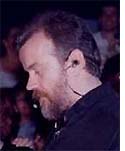 It was men like Kevin Robinson, Kay Williams and Timmy Allen.
The main reasons were probably the closer contacts, influences
and competition from the musicians and songwriters in US that
Petrus used in his productions. But the Italians were not out
numbered in anyway and they still wrote a huge majority of the
tracks in 1981-1983. In 1984 and 1985 they didn't write at all
however, not because they were not allowed or weren't good enough
anymore, but simply because they had left Petrus after the severe
economical problems of Little Macho in 1983 as a result of the
collapse of Goody music in 1982. When it comes to the lyrics
however, it was something that outsiders took care of as been
said before, simply because the Italians didn't feel comfortable
enough with the language.
It was men like Kevin Robinson, Kay Williams and Timmy Allen.
The main reasons were probably the closer contacts, influences
and competition from the musicians and songwriters in US that
Petrus used in his productions. But the Italians were not out
numbered in anyway and they still wrote a huge majority of the
tracks in 1981-1983. In 1984 and 1985 they didn't write at all
however, not because they were not allowed or weren't good enough
anymore, but simply because they had left Petrus after the severe
economical problems of Little Macho in 1983 as a result of the
collapse of Goody music in 1982. When it comes to the lyrics
however, it was something that outsiders took care of as been
said before, simply because the Italians didn't feel comfortable
enough with the language.
The
accomplished personnel
Petrus
hired brilliant musicians and vocalists of the best class money
can buy during the years. They were known from the jazz, soul
and funk scenes and had played with the world´s greatest
artists or were trying to reach that glory in the late 70s to
mid 80s when Petrus was looking for some personnel to be used
on the recordings. It was names like trombonist Bob Alexander
that played with many of the big bands in New York already in
the 50s, trombonist Dave Bargeron that played with such great
jazz acts like Miles Davis and Terumasa Hino, mastermind producer,
singer and songwriter Leroy Burgess, the man behind groups like
Black ivory, Aleem, Inner life besides a few outstanding 12"
singles on his own and producer and musical director and musician
Ray Chew that worked with the cream of black R&B artists
like Stephanie Mills and Melba Moore. Although these musicians
are only a few names the quality was equally high among almost
all of Petrus' choices. The flip side of this good taste of
Petrus was of course the heavy costs that also increased for
each year and eventually became one of the main reasons to his
prematurely death.
A
few words must also be said about the lyric writers. Two of
the most well used between 80 and 81 were Paul Slade and Tanyanette
Willoughby that Petrus engaged in 80 among several NYC key figures.
Their important role to bring further light to the excellent
music like "Heaven of my life" by Change for example
shouldn't be overlooked Today Tanyanette still bring the old
vibes back in NYC in places the "Old Cellar" on 95th
and Columbus Avenue. She also hosts on Tuesday evenings at the
"Sugar Shack" in Harlem on 139th and 8th Avenue (2006).
Engineers
and studios
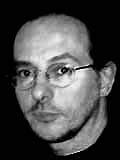 On
the technical side of Petrus' and Malavasi's productions Petrus
used several good engineers in many different studios both in
Italy and in US. In Italy played the experienced engineer and
keyboardist of Maurizio Biancani (left) at the Fonoprint studios
in Bologna a crucial role during the early years in the web
of contacts that Petrus was building up. He was born in Bologna
1953 and had started his career at Fonoprint studios in 1970.
He was filled with experience when Petrus took advantage of
his services in 1978, a companionship that lasted until 1981
besides a short revival on the album of Silence 2 in 1984. As
important Biancani was in Italy as important was Michael Brauer
(to the right) at the mythical Media sound studios in New York.
He was the man that soon was to take over the scene as Petrus
most appreciated and well used engineer both in Italy and in
US in favor of Biancani. Brauer had worked in the New York studio
since 76 and advanced rapidly. He had earlier played drums in
the group On
the technical side of Petrus' and Malavasi's productions Petrus
used several good engineers in many different studios both in
Italy and in US. In Italy played the experienced engineer and
keyboardist of Maurizio Biancani (left) at the Fonoprint studios
in Bologna a crucial role during the early years in the web
of contacts that Petrus was building up. He was born in Bologna
1953 and had started his career at Fonoprint studios in 1970.
He was filled with experience when Petrus took advantage of
his services in 1978, a companionship that lasted until 1981
besides a short revival on the album of Silence 2 in 1984. As
important Biancani was in Italy as important was Michael Brauer
(to the right) at the mythical Media sound studios in New York.
He was the man that soon was to take over the scene as Petrus
most appreciated and well used engineer both in Italy and in
US in favor of Biancani. Brauer had worked in the New York studio
since 76 and advanced rapidly. He had earlier played drums in
the group 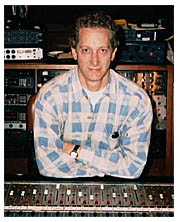 Silverhoof
that was a band formed by Ron Silverlight, the brother of one
of Petrus' most appreciated and used drummers, Terry Silverlight.
Petrus engaged Michael in 1979 for the first time just as the
second period of Petrus' and Malavasi's era started. That year
he mixed two tracks for Change's first album in 1980 that also
became his first personal big break as engineer. He worked also
with Peter Jacques band's album on which he recorded and mixed
the vocals in US as well as Macho's second and last album "Roll".
Both these albums were also released in 1980. At this time Brauer
just worked in US, but he must have made a strong impression
on Petrus, as he already in 1981 was flown over to the Bologna
studio. At his arrival in this new studio environment Brauer
literally took over Biancani's role as the main engineer. Even
though Biancani was credited as engineer together with Brauer
on both Change's and B. B. & Q. band's albums that year
no one else except Brauer engineered a single note. Even though
Brauer's memory is a bit unclear, Biancani was most likely his
assistant in 81. If that was the case it consolidated the shift
in power between the two. A funny story was that the speakers
in the Bologna studio was in such a terribly poor condition
that Brauer had to use his own 6" German Visonik David's
monitor speakers when he recorded the two albums. Despite the
small size, they had a very high quality that provided a very
neutral sound, crucial for studio and audio professionals, even
though Brauer certainly must have wanted something better. Brauer
remained as the main engineer over the 1982 season but his position
was shared with others, mainly by his old mentor Michael Barbiero
from the Media sound studios. In 83 Brauer didn't participate
in any Petrus project but did a short comeback in 84 on the
albums of Change and Silence 2 before his final departure. Although
Brauer worked four years together with Petrus he didn't exactly
appreciate his character and methods and his verdict about Petrus
is without mercy: "He was
a wolf in sheeps clothing. He was shit. If you (one) think for
one moment that Petrus was anything less that an evil man, you
are much mistaken and to write otherwise would be misleading." Silverhoof
that was a band formed by Ron Silverlight, the brother of one
of Petrus' most appreciated and used drummers, Terry Silverlight.
Petrus engaged Michael in 1979 for the first time just as the
second period of Petrus' and Malavasi's era started. That year
he mixed two tracks for Change's first album in 1980 that also
became his first personal big break as engineer. He worked also
with Peter Jacques band's album on which he recorded and mixed
the vocals in US as well as Macho's second and last album "Roll".
Both these albums were also released in 1980. At this time Brauer
just worked in US, but he must have made a strong impression
on Petrus, as he already in 1981 was flown over to the Bologna
studio. At his arrival in this new studio environment Brauer
literally took over Biancani's role as the main engineer. Even
though Biancani was credited as engineer together with Brauer
on both Change's and B. B. & Q. band's albums that year
no one else except Brauer engineered a single note. Even though
Brauer's memory is a bit unclear, Biancani was most likely his
assistant in 81. If that was the case it consolidated the shift
in power between the two. A funny story was that the speakers
in the Bologna studio was in such a terribly poor condition
that Brauer had to use his own 6" German Visonik David's
monitor speakers when he recorded the two albums. Despite the
small size, they had a very high quality that provided a very
neutral sound, crucial for studio and audio professionals, even
though Brauer certainly must have wanted something better. Brauer
remained as the main engineer over the 1982 season but his position
was shared with others, mainly by his old mentor Michael Barbiero
from the Media sound studios. In 83 Brauer didn't participate
in any Petrus project but did a short comeback in 84 on the
albums of Change and Silence 2 before his final departure. Although
Brauer worked four years together with Petrus he didn't exactly
appreciate his character and methods and his verdict about Petrus
is without mercy: "He was
a wolf in sheeps clothing. He was shit. If you (one) think for
one moment that Petrus was anything less that an evil man, you
are much mistaken and to write otherwise would be misleading."
Both
of them are still working as engineers today. Brauer with his
own M.H.B. production company in New York and Biancani still
at the Fonoprint studios in Bologna. They have an amazing amount
of work as engineers with world known artist under their belts.
In these two Petrus found skillful and experienced forces that
were well used but not always well paid as it turned out.
From
Goody music to Renaissance international
 After
Petrus' and Malavasi's first releases in 1978 their joint Goody
Music production (GMP) company played a multi-role. It didn't
only produce music by the in-house Italian producers but was
also a publishing company and a label for the European market.
GMP even licensed outside artists on their label.. It could
be music by the obscure Frenchman Elvin Shaad and his debut
album "Live for love" in 1978 or the American vocalist
Geraldine Hunt. But most of all the label was used for Petrus'
in-house bands like, Macho, Peter Jacques band and later on
Change. After
Petrus' and Malavasi's first releases in 1978 their joint Goody
Music production (GMP) company played a multi-role. It didn't
only produce music by the in-house Italian producers but was
also a publishing company and a label for the European market.
GMP even licensed outside artists on their label.. It could
be music by the obscure Frenchman Elvin Shaad and his debut
album "Live for love" in 1978 or the American vocalist
Geraldine Hunt. But most of all the label was used for Petrus'
in-house bands like, Macho, Peter Jacques band and later on
Change.
As
a parallel to that, Petrus soon turned to the US for publishing
issues and by that move he tried to get a bite of the gigantic
and highly important US market. As Petrus and Malavasi wanted
a major breakthrough in the US this was a crucial decision that
moved him closer to the big moguls of music and the never-ending
flood of hungry and talented musicians and vocalists that he
so much needed. In the US he opened up a small publishing office
in New York in 1978, using the name Little Macho instead of
GMP. The office was situated on the 7th floor on 1775 Broadway
street. Petrus managed to get contracts with several record
companies like Prelude and Atlantic/RFC so he could release
the "new Italian sound" on the US market as well.
Early on he appointed a couple of key figures like the talented
teenager Mic Murphy (road manager of Kleeer; soon co-founder
of The System) and Steve Bogen to operate the office while he
was in Italy. They learned a lot from Petrus during this period
that helped both Petrus and them self.
The
great ambitions of GMP was in the long run impossible to maintain.
Until 1980 the GMP label was still a label to count with. After
that however the number of new releases dropped dramatically,
mainly because of economical problems. It was probably just
too hard for them to stick with this multi-role of taking care
of the whole musical process. As a result of that the cooperation
with other labels to publish their music on the European market
increased and the productions in 1981 were split into several
labels instead of GMP like EMI (Holland), ZYX (West-Germany)
and WEA (West-Germany).
The
unpleasant economical situation for GMP grew even stronger though
and in 1982 it was all clear that the Petrus couldn't keep GMP
floating anymore. The coasts were simply to high for his ambitions
and GMP did finally collapse and officially disappear that year
even though GMP's last release was made in 1981 with Change's
second album. Petrus' newest project in 1981 The B. B. &
Q. band clearly emphasized that paradigm shift when their debut
was put on EMI (Holland) instead of the GMP label. GMP's role
as a publishing company and label were now gone but the production
role was still very much alive, a role now fully taken over
by the Little Macho office. To consolidate that shift Petrus
and Malavasi moved to New York to take care of Little Macho
on site. They continued to produce music for three more years
although in a much smaller costume than before and with a much
more Americanized staff of musicians and producers.
Petrus
role was still strong though despite the revolutionary changes.
He was still the executive producer, producer and head manager
of Little Macho affairs but he was more depending on others
than before when his label was gone. From now on he had to shop
contracts both in Europe and in the US like anybody else. This
was indeed a rather huge step for the whole Petrus and Malavasi
dream, to be forced to lose up the overall desicion making control
to outsiders whether their music was alright or not. But they
didn't have any choice due to the increasing economical problems,
a problem that didn't left Petrus until he was six feet under.
The
Little Macho period was not for long though and already in the
shift between 1984 and 1985 Petrus was back in Italy leaving
Little Macho dead behind him. Here he created a new production
company called Renaissance international and the publishing
company Vedette international. As artistic director of the two
divisions Petrus appointed the experienced ex Kano member Luigi
"Luis" Figini. He was together with Malavasi one of
the first Italian producers to reach success in the US and the
man behind great hits with Kano like "I'm ready" in
1979 and "Dance school" in 1983. By doing that Petrus
wanted to bring back that old sparkle from the late 70s to early
80s, but it was impossible. The
new companies were the last administrative efforts Petrus did
before he was killed.
Working
order and procedures
Petrus
and Malavasi, and in some extent Romani, did have a special
bound that followed them until 83-84. Even though Romani was
musically very important Malavasi and Petrus were the two main
characters. Like two Roman emperors their power and roles were
divided; Petrus was the boss and took care of the business side
and Malavasi the creation of the music. More speciically Petrus
role was to collect money, make deals with new artists (on the
Goody music label in 1978-1982) and record companies outside
Italy as well as building up good long term contacts with the
companies and to find musians and singers. He did also set the
musical guidelines, hire or fire touring personnel, pretty much
everything except writing, arranging and producing the music.
In the US Petrus used to go to different clubs to find suitable
singers and musicians. If he liked what he heard, he approached
them. Some were used on the recordings in Italy but most of
them were hired to front the band and/or be a part of the touring
ensemble. In the late 70s the Italian influences in the writing,
arranging and producing areas were almost complete but in the
early 80s American influences became stronger in each year.
He made it all in a very straight forward, an easy and relaxing
way. He also had the final word over who's gonna play in the
"band" when such band identities became a reality
in the early 80s (Change as the best example), the lineup for
the touring band, that many times was different from the lineup
of the recording band, and much more. Petrus did practically
a little bit of everything and was an unorthodox CEO of Goody
music/Little Macho that liked to put his fingers in any jar
can possible.
Even
though Petrus was mainly a businessman he did participate in
the studio and had the over all and final decisions in his hand
about what songs that was going to be used and on which albums
they should be released on. Therefore one might say that he
had an important indirect role in the creation of the music
it self. He
even co-wrote some tracks, but that was a rare thing. Drummer
Terry Silverlight describes the process:
I
think Fred was the business guy. He didn't seem to be hands-on
musically, although he was certainly aware of the overall
direction and obviously was one of the creators of the overall
vision. But, he left all the technical aspects and particulars
of the actual music making to Mauro, with assistance from
Davida and a few other friends in the control room."
and "Mauro Malavasi who was the leader of the sessions
in the sense that he made all the musical decisions and had
the overall musical vision as to what all the rhythm section
players should be playing, including myself. Davida Romani,
the bass player who was living in Bologna contributed a lot
of his ideas too and he and Mauro were in constant communication.
The
musicians were hired and flown in to the studio in Bologna,
Italy and did their job but had no idea of how the material
was going to be used. They were in total darkness playing their
small but important role within certain directions but only
Petrus, Malavasi and Romani saw the whole picture. The musicians
had possibilities to change and developed the groove though,
but only within certain limits. Malavasi and Petrus always had
the last word about the final result. It was first several months
later that the musicians could hear their great contributions
when the songs finally had made their ground on different albums.
Silverlight recalls about that process:
"...basically
Mauro would say, "OK, here's a new song and the tempo is this
and let's try some different drum grooves. The small rhythm
section would play the groove, try several options, learn
where the breaks and changes were in the song form, and then
cut the song in one or two complete takes. Not much punching
in. What you hear on those records, at least as far as the
drums goes are live, complete takes. Davida punched in his
bass parts relentlessly after my drums were recorded. I say
relentless in a complimentary way. The parts Davide created
by being so meticulous made for some of the most inventive
bass lines in recorded history. This procedure went on for
a full two weeks, one track after another."
Although
it was very hectic days in Italy during the recordings the musicians
experienced some nice moments outside the studio during their
visits to Italy. Petrus brought them to fancy and beautiful
restaurants at lunch and dinner and ate plenty of great food.
But non was getting rich on their work, if anyone did, it was
Petrus. Despite this imaginary richness Petrus was slowly sinking
deeper into economical problems trying to keep up with the heat
from they who wanted their money. This became later the major
reason to his early death.
The
mixture between Petrus talent and his musicians became a stone
hard combination that during the first years certainly worked
very good without any major friction.
Mafia
connections?
It's
not an overstatement to say that the Mafia created some of the
disco music in the late 70's and an even greater part of the
Italodisco or Eurodisco. It's indeed a fact that some of the
money brought into the disco era productions and the record
companies that supported them came from the Northern Italian
Mafia and the American based Italian Mafia in New York. They
still possessed an immense power at the time before the spectacular
trials of the 90s and the decline of their power. For example
was the Buddah record company in New York entirely Mafia property,
and they ruled with sometimes rough methods. What the Mafia
did was understandable in their point of view. Where there is
money, there is the Mafia, but there is only one problem, it's
illegal. Of course not every Italian was involved, in fact quite
the opposite, especially among the great musicians. On a whole
it was very few people directly involved. But the Mafia were
there in the shadows. One thing is clear though; without their
black money, some of the best disco music wouldn't have been
made. But the notion of that drugs and underground casino money
were brought in is not a pleasant one.
But
was Petrus actually involved with the Mob? Sadly to say, he
was most likely so, even though it's uncertain if it actually
was the Mafia or a similar sub organisation. Way to much information
from several different sources points that out, to many to be
just rumors or coincidences. It is in the late 70s and early
80s that Jacques Fred Petrus most likely gets involved with
the organized crime, even though most sources don't say it straight
out. Some sources do however state that Petrus eventually helped
the Mafia to whitewash black money to gain access to important
and always welcomed money into his business. Like all musical
businesses it's a rough and hard playground and the need for
financial support is crucial. Petrus had big dreams and his
business was no exception from the rule. Of course such activities,
if they actually occurred, must have helped the financial part
of his musical projects. But on the other hand it also bound
his hands behind his back for years to come, and even more seriously,
it threaten to put his whole dream in jeopardy. Whether he played
a higher role or just was I brick, the Mob got what they wanted
and Petrus too. The problem was that he was forced to pay back
to the Mob in "music money", a fact that later became
more of a problem then now as selling figures dropped. If the
musicians were aware of this is not known, but likely some must
have known. One thing is sure though, Petrus decision had great
impact on the rest of his career.
Down
to business - The first period 1978-1980
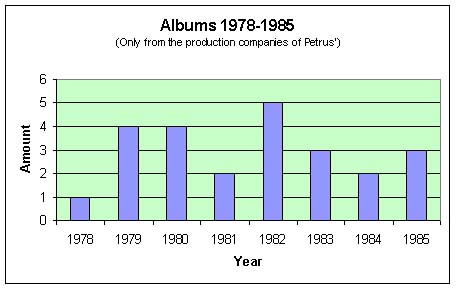
 Petrus'
and Malavasi's work were clearly divided in two periods when
it came to commercial success and different projects. The first
period, completely characterized by the disco influences, lasted
between 1978 and 1980 and all the records from the period were
released on Petrus' and Malavasi's own Goody music label in
Europe and Atlantic or Prelude records in the US. The main productions
included their
first band, a studio
group called Macho, named after the singer in the band that
was formed in 1978 (two albums in 1978 and 1980 including the
17:42 minutes long and successful monstertrack "I'm a man"
in 78), Revanche (one album in 1979 including the knockout stomper
disco hit "1979 it's dancing time"), Peter Jacques
band (three albums in 1979, 1980 and 1985), Midnight gang (one
album in 1979) and their unmistakably biggest success Change
(six albums in 80, 81, 82, 83, 84 and 85). A few other quite
anonymous projects were also going on during the first period
that today are very hard to get. One of them were A. N. T. I.
Rock and their one-and-only 12" "D. I. S. C. O. from
1980 than in fact was an Italian version (performed in Italian)
of the French group Ottowan's mammoth dance smoker with the
same name that year. Petrus'
and Malavasi's work were clearly divided in two periods when
it came to commercial success and different projects. The first
period, completely characterized by the disco influences, lasted
between 1978 and 1980 and all the records from the period were
released on Petrus' and Malavasi's own Goody music label in
Europe and Atlantic or Prelude records in the US. The main productions
included their
first band, a studio
group called Macho, named after the singer in the band that
was formed in 1978 (two albums in 1978 and 1980 including the
17:42 minutes long and successful monstertrack "I'm a man"
in 78), Revanche (one album in 1979 including the knockout stomper
disco hit "1979 it's dancing time"), Peter Jacques
band (three albums in 1979, 1980 and 1985), Midnight gang (one
album in 1979) and their unmistakably biggest success Change
(six albums in 80, 81, 82, 83, 84 and 85). A few other quite
anonymous projects were also going on during the first period
that today are very hard to get. One of them were A. N. T. I.
Rock and their one-and-only 12" "D. I. S. C. O. from
1980 than in fact was an Italian version (performed in Italian)
of the French group Ottowan's mammoth dance smoker with the
same name that year.
The
Goody music orchestra
When
the first album of Macho came Petrus had hired and contracted
a staff of Italian musicians partly mentioned above that worked
under the umbrella name of "The Goody music orchestra"
including the great Italian musicians of Malavasi, Romani, Gianolio,
Trevisi, Melotti and so on. They received a monthly salary and
were not allowed to work on any other projects. In that respect
they were chained with Petrus whos contract was indeed strict.
The role of the collective and anonymous orchestra faded away
during the early 80s. It became more rarely used on the covers
and soon it disappeared in favor of the individual names of
the Italian musicians that now could shine on the covers by
them self.
On
these early production until 1981 all the projects were almost
entirerly faceless studio concepts and didn't have any real
band indentity. But it was at this time Petrus also started
to experiment to actually create a real band and give the fans
a pretty face to look at. This band like identity was first
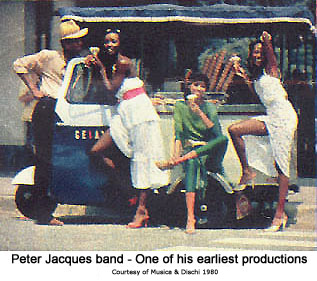
seen on Peter Jacques band's second album "Welcome back"
in 1980. Four American singers were not only mentioned as a
"group" but also clearly depicted both on the front
and back covers. Despite this move the studio creations were
stll Petrus tool for success before the big changes in 1981-1982.
American
singers and songwriters
Even
though Petrus had his inner core of well educated and skillful
Italians a crucial thing was stopping him from getting on top
of the world outside Italy. The simply reason was that they
only could speak Italian and hardly no English. To compose and
produce in Italian were no problem but when it came to singing
and writing Petrus had to engage outside singers and writers
for that task. Before Goody musics first release in 1978 Petrus
began scouting intensively from their NY outpost for those key
figuers and many was found and used, some more than others.
One of the most well-used singer during the first years was
the highly experienced former Black Ivory member Leroy Burgess.
Otherwise the vocalist came and went as Petrus was restless
and tried different combinations for a perfect result. In 1980
when the contacts in NY were better and more developed not only
singers were hired but also musicians.
Change
- The golden child
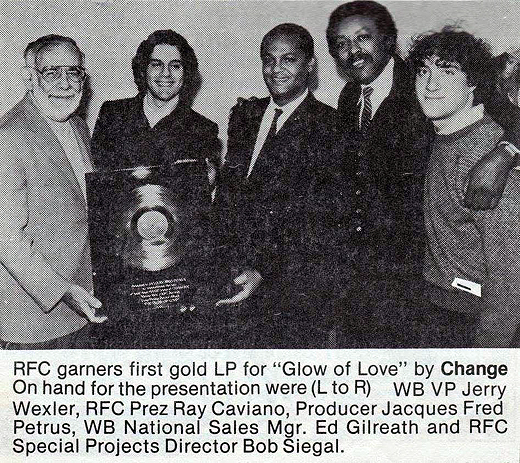
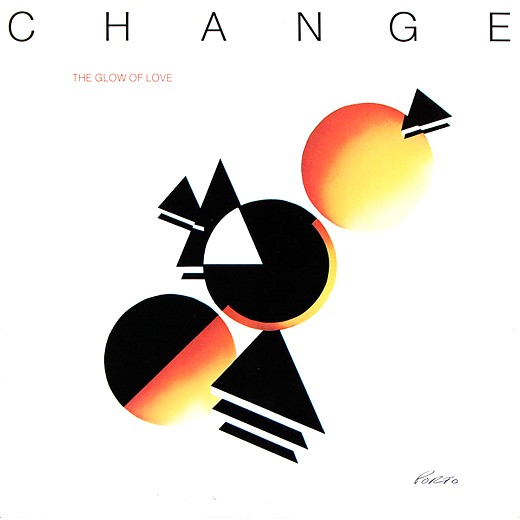 In
December 1979 the production of what soon became the studio
group Change was finished. The album "The glow
of love" was released in 80 and became a fantastic success
and placed it self on the top of most charts for weeks. The
album included besides the title track hits like the bubbel-gum-like
"A lover's holiday", dreamy "Searching"
- that in the last minute replaced the originally intended track
"Starlette" that one year later was found on B. B.
& Q. bands debute album instead - and the catchy
and aggressive "It's a girls affair". But was
this just a Chic copy? Well, both yes and no. Most artists were
influenced by Chic at the time and Change was one of them. Davide
Romani, that played a huge role as songwriter on the release,
admits that that was the case. But Change did have its own sound
from the beginning that was even more refined and melodic than
Chic. Characteristically for Change was the much more polished,
smoother, softer and airy, laid back sound compared to Chic's
more harder, aggressive, raw and more grooveoriented, on-the-listerner
sound. In
December 1979 the production of what soon became the studio
group Change was finished. The album "The glow
of love" was released in 80 and became a fantastic success
and placed it self on the top of most charts for weeks. The
album included besides the title track hits like the bubbel-gum-like
"A lover's holiday", dreamy "Searching"
- that in the last minute replaced the originally intended track
"Starlette" that one year later was found on B. B.
& Q. bands debute album instead - and the catchy
and aggressive "It's a girls affair". But was
this just a Chic copy? Well, both yes and no. Most artists were
influenced by Chic at the time and Change was one of them. Davide
Romani, that played a huge role as songwriter on the release,
admits that that was the case. But Change did have its own sound
from the beginning that was even more refined and melodic than
Chic. Characteristically for Change was the much more polished,
smoother, softer and airy, laid back sound compared to Chic's
more harder, aggressive, raw and more grooveoriented, on-the-listerner
sound.
If
one compare Chic's "Chip of the old block" from the
same year with "A lovers holiday" the differences
are obvious even though the similarities are still there. The
more aggressive "A girls affair however, got much more
in common with Chic's album. Another difference was the way
of playing the guitar and the bass guitar. Change had a heritage
from the old classical European music in its sound, that must
have been a result of the many classically educated Italian
musicians Petrus used. It still had the punch and energy that
Chic had, but it sounded more classy, polished and pure nonetheless.
The may have had a similar sound, a common C in the beginning
of their names and released on the same label, but for every
serious listener, this is were the parallels ends.
Outcome
of the first period
During
this first period Petrus and Malavasi earned a relatively considerable
amount of respect with their music. Malavasi as the composer
of literly all songs until 1980 became one of the most important
figures in disco in general and the Italian disco in particular.
The music was characterized by some joyful, rather catchy and
decent disco tracks, interesting, but hardly innovative. There
were with just a few exceptions of really high quality like
Revanche's catchy track "1979, it's dancing time"
from their one and only mini-album in 1979 (a format that most
Petrus/Malavasi productions had in 1978-1980). That track was
in fact one of the most memorable ones in the entire Goody music/Little
macho production history and a classic disco tune. But Revanche
was an exception and real success was not acheived until the
end of the first period with the albums of Peter
Jacques band and Change in 1980 that really set a new standard
for Goody music/Little macho. Change not only ended the first
period but started the second one as well and became their number
one success. By overlooking the whole first period It's not
an overstatement to say that Petrus and Malavasi got their big
break in 1980 after two years of hard work. Whether you're a
disco fan or not, one has to admit that Petrus and his team
reached their most successful point at this time both musically
and commercially. Such fluency and harmony that could be heard
now simply hadn't been heard before. And the success continued
with more awesome albums by Change and perfect blend music from
new act's like B. B. & Q band and High fashion later on.
 1980
was not only a successful year with Change and Peter Jacques
band but also a year when Petrus made huge and surprisingly
big changes among the number of bands that was supposed to stay
on the Goody music production roaster. Petrus was not mercyfull
in his judgement though and almost did a clean house with all
these early band's that completely vanished, with the exception
of Change and Peter Jacques band. And even though Macho did
release an album in 1980 they didn't drop any more new stuff
after 1980. Why this rapid change occurred is unclear but as
always Petrus likely must have had a new plan explaining why
he almost swept all the old band's away. Most likely Petrus,
and maybe also Malavasi and some of the others among the inner
core, were not satisfied with the overall commercial and musical
success with the other band's and they decided to start from
scratch. And he thought that he could afford it after the tremendous
success with Change's debut "The glow of love" backed
up by the excellenct album "Welcome back" by Peter
Jacques band that all together must had put him in a state of
euforia. 1980
was not only a successful year with Change and Peter Jacques
band but also a year when Petrus made huge and surprisingly
big changes among the number of bands that was supposed to stay
on the Goody music production roaster. Petrus was not mercyfull
in his judgement though and almost did a clean house with all
these early band's that completely vanished, with the exception
of Change and Peter Jacques band. And even though Macho did
release an album in 1980 they didn't drop any more new stuff
after 1980. Why this rapid change occurred is unclear but as
always Petrus likely must have had a new plan explaining why
he almost swept all the old band's away. Most likely Petrus,
and maybe also Malavasi and some of the others among the inner
core, were not satisfied with the overall commercial and musical
success with the other band's and they decided to start from
scratch. And he thought that he could afford it after the tremendous
success with Change's debut "The glow of love" backed
up by the excellenct album "Welcome back" by Peter
Jacques band that all together must had put him in a state of
euforia.
The second period 1981-1985
As
for the second period the individual tracks of these projects
were very similar and could have without too great difficulties
been reversed from one album to another without any one knowing
it. In that respect were the sound of Petrus/Malavasi somewhat
"fabric" made during the second period, but therefore
not musically something less attractive!
Malavasi
hegemony in the songwriting area during the first period was
almost complete. It was just a few tracks that was written by
others like Romani, Gianolio and Trevisi. But that was going
to change during the second period that lasted from 1981 to
1985. During
this time frame the great Malavasi continued to be the
indisputably number one songwriter, arranger and conductor but
did get some real competition from Romani. In 1981 these two
Italians grip over the composing and producing aspects were
still very strong but a change of balance towards the US was
obvious and as a consequence of that Petrus and his main staff
moved to New York in 1982. The New York office of Little macho
had gone through a metamorphose in favor of the collapsing Goody
music production, but in a smaller costume. That major geographical
and administrative change also affected the number of musicians
from the US that participated on the records. Especially in
1982 and 1983 that was extra obvious. But it didn't last for
long and in 1984-1985 Petrus was back in Italy again. Even though
the Americans temporarily took over in favor of the Italians
Petrus had found the best musicians possible including great
names like Kashif, Yogi Horton, Kevin Robinson, Hiram Bullock
and Timmy Allen to name a few.
This
period was also characterized by a great deal of serious economical
turmoil. Petrus both massively over spendid, becam more econonically
self centred and the estimated sales fugures didn't match the
reality. In 1982-1983 all these factors resulted in big changes
for Petrus as a person and businessman. But evan more importantly
Petrus also lost many of the great Italians due to the economical
problems (he could rarely pay them their monthly money check)
and serious disagreements when it comes to which way the music
should go. Even things like Malavasi's longing for Italy affected
his desicion to move back after the releases in 1983.
Too
much melody - The successful formula
Already
at the end of the first period in 1979-80 the later on so successful
"Change" sound was molded out. It was characterized
by a well-produced, slick and polished blended sound of disco
and R&B. The development went from the former to the latter
and ended up with clearly pop/synth influenced music in 1985,
especially emphasized on PJB's last album.  But
there was something that always was present during all these
years; strong and catchy melodies! These significant parts were
crucial trademarks of the sound. To focus so much on the melodies
were not a random thing, it was a conscious choice and decision
by Petrus and his inner core of Italians. An interesting statement
by Petrus in 1981 explains his views as he considered the X-factor
to be "---too much melody---". And who can
say that Change and B. B. & Q. band in 1981, and even the
albums later on by them and High fashion and Zinc were lacking
of catchy and immensely strong melodies, no one of course! The
successful formula and almost too well-produced melodies were
simply "too much" in the good sense of the word, something
that one easily couldn't live with as the result was dream music
on the highest level! But
there was something that always was present during all these
years; strong and catchy melodies! These significant parts were
crucial trademarks of the sound. To focus so much on the melodies
were not a random thing, it was a conscious choice and decision
by Petrus and his inner core of Italians. An interesting statement
by Petrus in 1981 explains his views as he considered the X-factor
to be "---too much melody---". And who can
say that Change and B. B. & Q. band in 1981, and even the
albums later on by them and High fashion and Zinc were lacking
of catchy and immensely strong melodies, no one of course! The
successful formula and almost too well-produced melodies were
simply "too much" in the good sense of the word, something
that one easily couldn't live with as the result was dream music
on the highest level!
Productions
during the second period
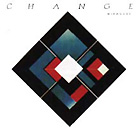 In
80 and 81 Petrus and his staff had a busy time creating the
new music of 81. Besides Change and their successful debut album
Petrus wanted yet another studio concept, later named Brooklyn,
Bronx & Queens band after the three areas the "band"
members (with accomplished bass guitar player Paris Ford as
the main character) came from. The creation process of the music
in 81 was basically the same as before. First Malavasi, Romani
and a few other Italians under Petrus supervision created a
bunch of tracks in Italy. With the final 16 songs they decedid
to use in hand both Italian and flewn in US studio musicians
recorded these songs at the Fonoprint studios in Bologna, Italy.
They were then taken back to Media sound studios in NYC and
divided in two sets of 8. The vocal parts were then implemented
by separate studio singers for each band. Brauer and a few others
took finally care of the mixing and mastering the stuff before
the two productions were finished. In was first at this stage
that one of the sets were assigned the name of B B. & Q.
band. The other set was of course meant for already established
concept Change that at the same time also did get a more band
like identity. In
80 and 81 Petrus and his staff had a busy time creating the
new music of 81. Besides Change and their successful debut album
Petrus wanted yet another studio concept, later named Brooklyn,
Bronx & Queens band after the three areas the "band"
members (with accomplished bass guitar player Paris Ford as
the main character) came from. The creation process of the music
in 81 was basically the same as before. First Malavasi, Romani
and a few other Italians under Petrus supervision created a
bunch of tracks in Italy. With the final 16 songs they decedid
to use in hand both Italian and flewn in US studio musicians
recorded these songs at the Fonoprint studios in Bologna, Italy.
They were then taken back to Media sound studios in NYC and
divided in two sets of 8. The vocal parts were then implemented
by separate studio singers for each band. Brauer and a few others
took finally care of the mixing and mastering the stuff before
the two productions were finished. In was first at this stage
that one of the sets were assigned the name of B B. & Q.
band. The other set was of course meant for already established
concept Change that at the same time also did get a more band
like identity.
These
efforts finally reached the market with the two excellent albums
of "Miracles" by Change and B. B. & Q. band's self-titled
debut album. The album of Change is a well-balanced and perfect
musical achievement with a touch of heaven all the way from
the first to the last song! The album, that certainly lived
up to its name, is probably the single most impressive production
that left the Petrus "stable". In addition its being
one of the best albums in 81 over all. "Miracles"
is jam packed with irresistible melodies including the three
hit singles of "Paradise, dreamy and irresistibly
catchy "Hold tight" and the majestically and
expressively singed "Heaven of my life" (including
a fantastic guitar break) that leaves no one untouched. Also
"On top" with its aggresive guitar play, catchy melody
and rock influenced chorus is excellent. Even though B. B. &
Q. band's more aggressive sound, or funkpop as ex Change member
Bova once described it, didn't reach the same level of consistency
as Change did they came up with the perhaps single most impressive
track that year in the gigantic megablast hit "On the beat"
written by Malavasi. It was backed up by the majestically singed
"Time for love" on side A with the competitive dance
tracks of "Starlette" and "Mistakes"
rounding up side B. The rest was unfortunately rather average
stuff which make Change a clear winner.
The
hectic year of 1982
In
82 five albums were released, all recorded at the Media sound
studios in New York without any Italian involvement at all this
time.  Petrus
and Malavasi did also move to New York to exclusively work at
the Little Macho office after the collapse of Goody music production
that year. Their move could be seen as a try to broaden their
musical base and as a next step in their common development.
But unfortunately it didn't last very long and the typical splitting
of the recordings were in 83 back to normal with the exceptions
of new studios. In 1984-1985 Petrus also moved back from New
York, closing down his Little Macho office for good and built
a partly new Italian base. This time however without his main
coworkers of Malavasi and Romani and most of the original Italian
staff. Petrus
and Malavasi did also move to New York to exclusively work at
the Little Macho office after the collapse of Goody music production
that year. Their move could be seen as a try to broaden their
musical base and as a next step in their common development.
But unfortunately it didn't last very long and the typical splitting
of the recordings were in 83 back to normal with the exceptions
of new studios. In 1984-1985 Petrus also moved back from New
York, closing down his Little Macho office for good and built
a partly new Italian base. This time however without his main
coworkers of Malavasi and Romani and most of the original Italian
staff.
But
1982 was still present and Petrus/Malavasi reached their absolute
crescendo when it comes to quantity; but was it top notch music
as well? The albums released in 1982 were "Sharing your love"
with Change, "All night long" by B. B. & Q. band,
"Feelin' lucky" by High fashion and "Street level"
by Zinc as well as 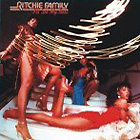 a
guestplay on Ritchie family's album "I'll do my best for
you". Two smash hits stood over the rest of the material
in the classy "Feelin' lucky lately" by High fashion
and "I'II do my best (for you baby)" with Ritchie
family. The first was written by Romani and the second by Malavasi
and represents two of the finest productions in their careers.
The rest the material on the album by High fashion was good
but not in any way astonishing. The album by Ritchie family
however did include the superb "Alright on the night".
But that track and all the rest of tracks from the constantly
evolving band, with the exception of Malavasi's "I'II
do my best (for you baby)" had nothing to do with Petrus
and his Italian staff as they where written by others. a
guestplay on Ritchie family's album "I'll do my best for
you". Two smash hits stood over the rest of the material
in the classy "Feelin' lucky lately" by High fashion
and "I'II do my best (for you baby)" with Ritchie
family. The first was written by Romani and the second by Malavasi
and represents two of the finest productions in their careers.
The rest the material on the album by High fashion was good
but not in any way astonishing. The album by Ritchie family
however did include the superb "Alright on the night".
But that track and all the rest of tracks from the constantly
evolving band, with the exception of Malavasi's "I'II
do my best (for you baby)" had nothing to do with Petrus
and his Italian staff as they where written by others.
Even
though Change and B. B. & Q. band didn't quite reach that
same hit level they presented nonetheless dozens of most capable
and catchy dance tracks including the slick floor filler
"The very best in you" by Change that did get
some commercial attention as it reached the highest position
on the charts and the electrofunkish "Imagination"
with B. B. & Q. band just to mention two.
As
the most unknown production that year Zinc didn't reach any
commercial success with their debut album "Street level"
and vanished after a poor 12" release in 83 that was a
left over from B. B. & Q band's album in 1982. But "Street
level" was nonetheless one of Malavasi's and Romani's most
exciting and innovative projects and much enjoyed by them self
and many of the musicians. It included the fascinating "Street
level" that was penned by the ex BT-Express member Kashif
and Romani's excellent funk gem "Punkulation". Kashif
was an uprising producer, songwriter and musician that was temporarily
used by Petrus that year and participated with two of the greatest
productions in 82 that besides "Street level" also
included the excellent up-tempo dance gem "Hold on"
by High fashion.
Much
can be said about Petrus but he definitely did know where to
find the best possible musical craftsmen!
From
project to band
An
important change in 82 mainly concerning the two most successful
projects of B. B. & Q. band and Change occured. As their
grooving popularity made the fans more curious and demanding
to see how they all looked like Petrus simply needed to give
them a more band like identity. This was most likely the main
reason why Petrus left the small-part-philosophy. Petrus took
notice of the situation and changed his mind. So, in 82 the
listeners finally could see how Change and B. B. & Q. band
looked like on the album covers. The new Change lineup was almost
entirely stable until the last album in 85. B. B. & Q. band,
that actually had a group like identity already in 81 even though
it was losely put together was stabalized in 82 and featured
the same lineup in 83 until a completely new band was created
in 85.
When
the picture of the members now were available for the first
time notable differences could be seen. On the Change album
they all were dressed up in costumes in a suitable, classy style
while the members of BB were wearing a more leisure wear outfit
(maybe hotter in the studio). That illustrated the tiny but
yet detectable differences between the two in a quite good fashion
as B. B. & Q. band had a slightly harder edge.
The
question is whether the formation of more group like identities
had any effect on the inspiration and creativity compared to
earlier albums when almost everything was uncertain. Most naturally
the earlier concept must have brought the best of each level
of performance whether it was in the studio or on the tour.
Probably Petrus original idea was the most creative and best
suited for his restless soul. All the earlier creations emerged
from, in a certain way, controlled chaos and he succeeded every
time with that "devils run". But was the new way of
working going to work in a good fashion as well? The answer
is yes, the success continued at least over the season in 82
with several very competent track produced and Petrus and Malavasi
could still sleep safely with dreams of eternal fame wandering
in their minds.
The
empire is stumbling...
At
the same time that the 82 albums hit the market the team worked
on the 83 albums, "It's your time" by Change,
"Six million times" by B. B. & Q. band,
"Make up your mind" by High fashion and the
12" "I'm livin' a life of love" by Zinc.
The recordings in 83 were made at the UMBI studios in Modena,
Italy with the exception of the 12" by Zinc that was recorded
exclusively at Media sound studios in New York. This new Italian
studio was situated in a farmhouse in the countryside of Modena
and was by Chieli Minucci described as "paradise!".
Minucci recalls that he participated in two sessions, one at
UMBI and one at Sorcerer sound but it's unknown if both of them
were used on the final recording. In general though the basic
creation of the music took place in Italy, the tapes were then
taken back to the US and Sorcerer sound and Sterling sound studios
in NYC for overdubs, mixing and mastering in 83. Where the recordings
of the vocals took place is not known but likely they were made
in NYC as well. Brauer and Media sound studios was this time
not involved but did a short comeback in 84 before the final
split with Petrus. .
Compared
to the last year this season were not as commercially successful
but was still able to present several really good tracks like
appealing "This is your time" with Change and
"Make up your mind" with High fashion. Both
albums, and especially the one from High fashion had a very
high general standard and are both very much worth having. B.
B. & Q. band's Prince inspired album under Kevin Robinson's
principal lead was unfortunately a flop that despite being innovative
just had two descent tracks that presumably were leftovers from
their most resent album. To let the more European sounded Zinc
project have just a tiny 12" clearly showed how important
they were in the producers eyes, especially as "I'm
livin' a life of love" was a left over from B. B. &
Q. band's album in 82 and Zinc soon disappeared from the scene
for good.
The
departure of the Italians - Petrus facing grooving problems
1982 was the starting year of major changes on many levels in
the Petrus musical empire. Cracks occurred that soon groove
bigger and eventually led to the departure of almost all of
the original Italian musicians that Petrus had worked with and
severe economical problems became a reality that eventually
led to Petrus prematurely death.
Two
main reasons are detectable to explan the major changes. Besides
these two main reasons played the fact that his entire work
force in 82 moved to New York and the Little Macho office also
a considerable role as something that affected the over all
working climate. The originally small publishing office had
by taken over the role as Petrus new production company after
the collapsing Goody music.
One
of these two main reasons had to do with different views between
the two main creators of the music, Mauro Malavasi and Davide
Romani. Romani was the more conservative of the two that wanted
to stick with the old successful formula on the new albums in
82 and 83. Malavasi on the other hand was more interesting in
a change of the music towards new and bolder creations. Some
say that this conflict affected the sail figures during these
years, but no proof for such a statement can be found much due
to the complexity of the matter. A fact that most likely did
affect the number of sold copies more than the disagreements
between Malavasi and Romani was the paradigm shift in music
over all from a general point of view. New and powerful trends
like pop- and synth music did considerably affect the music
industry together with sudden changes in what kind of music
radio DJ's decided to play on the radio that had a huge impact
too. The typical 70s and early 80s black groove that was the
trademark of Little Macho music was simply not as popular as
before and that is a tough customer to fight!
The
other main reason that affected all the personnel around Petrus
was the economy. Clear facts that explains the background to
that are sometimes hard to get in this case. A few things can
be seen though like the likely dark alliance Petrus had with
Mafia like elements, wrong economic plans, priorities and bad
selling figures. One or more of them affected for sure the role
of Petrus' and Malavasi's old production company Goody music
that quite rapidly faded away in the early 80s. In 82 the legendary
Italian label no longer existed. Mic Murphy that was one of
the co-runners of the Little Macho's office remembered that
people already in 81-82 were showing up now at the and then
at the office demanding money and threatening. Petrus had clearly
made some bad economical choices and combined with a drop in
the sales that was a dangerous combination.
Even
though Petrus company earned a lot of money the first couple
of years he became more and interested to put the in his own
pocked rather than sharing what was left of the profit equally
between himself, the Italians and the rest of the hired personnel.
That pattern became even stronger when the economical calculus
failed and the amount of sold records started to drop in 82-83.
As a result of that the monthly salaries that the Italians (the
original Goody music orchestra) earlier received were decreasing
or simply ceased completely. The situation for the temporarily
contracted Americans was sometimes even worse as Petrus many
times treated them really bad. Ex-member Chieli Minnuci of B.
B. & Q. band, that was only 25 years old in 83 recalls the
horrible treatment:
...he
didn't treat me right in the end. He was dishonest with the
money, so I bailed out...he almost stranded me in Italy, tried
to bribe me to stay longer...it was awful...
With
these two major changes in mind the Italians, the engineers
like Brauer, and the hired American musicians like Robinson
and Minucci, simply all the people around Petrus began to have
second thoughts about their engagements with Little Macho. One
of the original coworker of Paolo Gianolio had enough in 1982
and left the US for Italy for good but came back in 84 on the
obscure Petrus led Italian production of Silence 2. Also Romani,
that now was only 24 years old left the US after the productions
in 82, but just like Gianolio he worked with Petrus in 84 once
more on the album of Silence 2 and the 12" "Sunlight"
by M like moon. Romani later said that his departure was a great
mistake as he loved the American style of music too much. Trevisi
left in 83 as well and the great Malavasi in 84. In contrast
to Gianolio and Romani Malavasi and Trevisi never worked with
Petrus again. Malavasi later said the he missed Italy very much
(he was very home sick) that together with his uncomfortable
life in the US and the terrible economic situation made him
leave. Malavasi continues:
When
I became aware of the financial disaster I decide to stop
and return to Italy. There where rumours on the fact that
I, Gianolio and Romani should have been rivals, but everything
was absolutely false; we are often in contact and we have
a good relationship.
The
fact that Malavasi left was a spectacular thing and the successful
duo of Petrus and Malavasi was now history!
The
cash problems were also clearly shown on the covers of the albums
produced mainly in 83. Considerably less hired musicians were
used than before. Petrus used for example almost the same lineup
to play on the albums of B. B. & Q. band and High fashion
in 83. Change on their hand was almost completely Americanized
by now and continued more or less as before but the poor economy
affected the amount of players for Change as well. This was
a clear difference compared with the situation in 81 and 82
when much more musicians and vocalist were used and Petrus spending
ability seemed endless. Even though Petrus couldn't use as much
personnel as before it didn't affect the quality of the music
it self as the players that were left certainly was very, very
good. The only notable musical change during these years was
the obvious flirt with American R&B that from started already
in 82, took over completely in 83 and 84 until it faded away
on the pop consumed Petrus releases in 85.
Where
had all the money gone, Most likely the two sided sword that
Petrus got after his presumable pact with the devil (The Mafia)
now showed its other, more cruel side but also because of the
simple fact that the records from his empire didn't sell as
much as before. These two thing put Petrus up against the wall.
But even though he was under pressure he managed to make a few
more footsteps in the sand of music. Petrus was simply not done
yet.
In
a relatively short period of time Petrus had now lost four of
his absolutely most important producers and songwriters, arrangers
and conductors that was the force behind the success with Change
and B. B. & Q. band. This should have been a major blow
to anyone in Petrus' position, but no, not to Petrus. He was
able to stabilize the empire by using an almost hundred percent
US recruited staff in 83 and 84 with the exception of Silence
2 in 84. To have his base in New York and not in Italy between
82 and 84 naturally helped him a lot to succeed with that.
After
the departure the Italians participated in several Italian productions
either as musicians or/and producers. One of the first projects
were both Malavasi, Romani and Trevisi took part as musicians
was the band Stadio and their album "La faccia delle donna"
on RCA in 84. Even Maurizio Biancano, the old engineer of Petrus'
was the co-enginner on the album. Gianolio on his side worked
a lot with Celso Valli, that from time to time worked for Petrus
and others.
The
Italians were still in their mid twenties and had much more
left to give the world, a fact that became more than obvious
for Malavasi later on.
Flowchart
- A mysterious and rather amusing sidestep!
 Even
though the core staff of Italians were bound to work for Petrus
as being mentioned above a rather amusing sidestep from these
harsh circumstances was made by Romani in 1983. That year he
appeared as bass guitar player on the one-and-only and much
overlooked/sought after album by Flowchart under the pseudonym
"Dave Mandingose". This obscure Petrus/Malavasi style
influenced release was originally released with the title "New
Harlem funk" on the small Italian label "Maximus Records".
Few copies were made and even fewer were sold despite several
really good dance tracks of best Italian soul funk quality.
But the story of Flowchart wasn't over yet. A rich Italian wine
maker, Giacobazzi (still around today), found out about the
band. How he did that is unknown, but his musically interested
son was most likely the reason to that. The wine producer wanted
to finance a re-issue of the album but he had three demands.
First, he wanted to add one extra track to the original track
list that his son got to produce. Secondly, he wanted a new
title and thirdly he wanted a new album cover (see below). The
track that the son produced (also released on 12") was
cleverly given the name "A little love a little wine"
(marketing trick #1) and was printed in two different versions
on the new Flowchart LP (original and D.J. version). That song
title also became the name of the album. The cover design was
totally changed featuring a much more simple layout than the
original with the band name written in big blue letters with
an opened and tilted wine can in the bottom right corner (marketing
trick #2). This slightly moderated version of the original Flowchart
album was released on City Record, yet another small Italian
record label, in 1983. This meant that Flowchart came in two
different shades within a year; a really rare incident when
it comes to albums! Even
though the core staff of Italians were bound to work for Petrus
as being mentioned above a rather amusing sidestep from these
harsh circumstances was made by Romani in 1983. That year he
appeared as bass guitar player on the one-and-only and much
overlooked/sought after album by Flowchart under the pseudonym
"Dave Mandingose". This obscure Petrus/Malavasi style
influenced release was originally released with the title "New
Harlem funk" on the small Italian label "Maximus Records".
Few copies were made and even fewer were sold despite several
really good dance tracks of best Italian soul funk quality.
But the story of Flowchart wasn't over yet. A rich Italian wine
maker, Giacobazzi (still around today), found out about the
band. How he did that is unknown, but his musically interested
son was most likely the reason to that. The wine producer wanted
to finance a re-issue of the album but he had three demands.
First, he wanted to add one extra track to the original track
list that his son got to produce. Secondly, he wanted a new
title and thirdly he wanted a new album cover (see below). The
track that the son produced (also released on 12") was
cleverly given the name "A little love a little wine"
(marketing trick #1) and was printed in two different versions
on the new Flowchart LP (original and D.J. version). That song
title also became the name of the album. The cover design was
totally changed featuring a much more simple layout than the
original with the band name written in big blue letters with
an opened and tilted wine can in the bottom right corner (marketing
trick #2). This slightly moderated version of the original Flowchart
album was released on City Record, yet another small Italian
record label, in 1983. This meant that Flowchart came in two
different shades within a year; a really rare incident when
it comes to albums!
The
new title track had a nice groove and fitted well with the original
string of tracks but even more interesting is it to read the
credits on the back covers of the two releases. It's not only
the fact that Romani played bass pretending to be somebody else,
as mentioned above, it's something with the other names of the
players, vocalists, engineers etc. that isn't completely right.
Take the former co-runner of the Little Macho office in NYC
Mic Murphy (above) for example. His name is spelled "Micael
Merfi". Is that just a miss-spelling or something made
on purpose? The fact is that both of Romani and Murphy did participate
on the album. Murphy are even displayed on the cover but he
can't remember recordig it and has not listen to the album(s).
But you'll also find other strange names like "Ullaw Jo",
"Dany Jor" and "Mary Dan" among the vocalists.
Who are these people? Is Ullaw Jo in fact the background singer
Ullanda McCullough that Petrus used on many of his projects?
Also, not a word about any producer either, something indeed
unusual, at least when it comes to albums. Not confirmed information
though says that the producer was one of Petrus' studio musician
associates, Romano Trevisani, which only is credited as arranger.
If he in fact was the brainchild behind Flowchart together with
two executive producershe they were all real copycats of Petrus
way of producing a record as the whole process are so similar.
The recordings took place in both Italy and the US. When that
part was over Murphy didn't hear anything more, much perhaps
due to the fact that he was an American and that the release
was made in very small numbers on an Italian label, but nonetheless,
zero! He was even surprised to see the picture of himself on
the back cover of the first released version of the album and
discover the strange way of spelling his name. All that was
totally unknown to him until recently. He had no idea when the
photo actually was taken, besides from in a studio, and have
no memory clearing that one to be published for the release.
That way of dealing with the over all recording process was
typically Petrus style! There
are still a few question marks around Flowchart to be answered
though. Why were Romani, Murphy and maybe Ullanda McCullough
presented under pseudonyms? Was Petrus aware of this somewhere
in the background? Clearly though wasn't the original rules
as harshly followed at the time perhaps due to the extensive
turmoil caused by the severe economical crisis that Petrus had
put himself in and that demanded most of his time.
|
 |
|
DUE
VERSIONI
The
two covers of the super rare Flowchart album, the original
issue to the left and the second issue to the right. With
a similar sound of Petrus/Malavasi, strange names on the
cover, no mentioned producer this is perhaps P&M's
best kept secret?
|
Jimmy
Jam and Terry Lewis - A lucky strike in 84
84
was the beginning of a new and quite successful but short era.
Petrus/Malavasi had split up and most of the original lineup
of Italian musicians were gone due to the reasons described
above. Although Petrus prosperous teamwork with Malavasi and
Romani was gone he managed to find two new fantastic and multitalented
replacements in James Harris III and Terry Lewis. Petrus once
again showed his smart business mind and naurally he wanted
to continue to be the executive force new successful recordings.
The
serious economical situation did however affect the number of
releases in 84 that only included the albums of Change and Silence
2 and a debut 12" by M like moon. In reality in was only
the album by Change that had anything to to with the great traditions
the Petrus had built up before, the rest was just embarrassing
plastic Italo pop productions. Petrus invited a new strong team,
the uprising stars and former members of the Minneapolis funk
band The Time, James Harris III and Terry Lewis, more known
as Jimmy Jam and Terry Lewis. He used them to produced the new
Change album, "Change of heart". The Change
album was recorded both at the UMBI studios in Italy and at
the Media sound studios in New York.
 |
|
J
i m m y J a m
&
T e r r y L e w i s i n 1 9 8 2
Pics
taken from the Time cover
|
Petrus
had now
Jimmy Jam and Terry Lewis under his command. They played a tremendously
important role and wrote and produce most of the material together
with Change's talented bassist/keyboardist Timmy Allen, that
slowly had grown on his own and by now in reality was the leader
of the band.
Jam/Lewis
had started their producing career in 82 when they produced
parts of both SOS band's excellent album "S.O.S. III"
in conjunction with Leon F. Sylvers III and the all female funk
band Klymaxx's debut album "Girls will be girls" when
they were still members of The Time on which album they also
participated that year. In 83 they once again produced SOS band's
new album. In 84 they didn't only take care of Change album
but also Cherrelle's chilly sounded "Fragile"
and SOS band's outstanding album "Just the way you like
it". But among them were "Change of heart"
their most complete album. It was even one of best albums
that year and an excellent example of Jam & Lewis production
skills with tracks like addictive "Change of heart",
"You are my melody" and funky "It burns
me up". This was something to live for a long time.
(I still remember when I heard "Change of heart"
for the first time in a car going up to the Swedish Alps, it
was a moment of great happiness. So when I came back it was
nothing else to do than to buy it on the big Swedish mall NK!
;))
But the new companionship had just started before it ended because
of the same reasons as the rest of the personnel around Petrus
experienced. Jam and Lewis didn't get their paychecks in time
or at all. A story even says that they were forced to sell their
flight tickets to afford paying the hotel bills. The engineer
of Michael Brauer that been with Petrus since 1980 and mixed
the "Change of heart" album was ripped completely,
Brauer recalls:
Petrus
didn't pay me for the last Change record I mixed for Jimmy
Jam and Terry Lewis. That was the last project I did for him
so I wasn't aware that he was ripping me off until after the
project was over.
The
economical problems continued however and Petrus was now in
serious trouble.
Despite
his bad behavior two new and exclusively Italian projects were
actually made that year as well in contrast to the almost completely
American made album of Change that of course was the center
piece in 1984 regardless ot these two. They were Silence 2 album
"The beast in me", that featured the lead vocalist
Gordon Grody from B. B. & Q. band and the both homecoming
musicians Gianolio on lead guitar and Romani on bass guitar.
The album was officially produced by Petrus but in practical
terms it was a work by Celso Valli. The other short lived project
was the obscure M like moon band, that only released the 12"
"Sunlight". Both were poor rock pop projects of average
Italian class and obviously a part of Petrus' adventurous "new
Italian deal" that groove even bigger in 85, but the result
was just embarrassing Italo pop.
A
kingdom for a bunch of money - The dark end
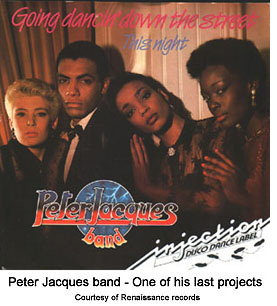 In
85 it was fall in Petrus world but despite major changes in
the music world, financial problems and perhaps an increasing
lack of inspiration Petrus was the over all force behind three
albums that year and a few new projects released on 12"
singles. All the albums were recorded at the Morning studios
in Milan and the UMBI studios in Modena. The three albums were
"Turn on your radio" by Change, "Genie"
by B. B. & Q. band and "Dancing in the street"
by PJB. They were all released on a completely new label/production
company Petrus created that year called Renaissance international
(company and label) and Vedette international (publishing).
Both of them were created in favor of the New York based Little
Macho productions that ceased to exist. As artistic director
of the two labels Petrus appointed the experienced Luis Figini,
best known as the former producer of classic Italian disco funk
band Kano. To choose the name Renaissance is an interesting
choice reflecting Petrus' perception of the musical situation. In
85 it was fall in Petrus world but despite major changes in
the music world, financial problems and perhaps an increasing
lack of inspiration Petrus was the over all force behind three
albums that year and a few new projects released on 12"
singles. All the albums were recorded at the Morning studios
in Milan and the UMBI studios in Modena. The three albums were
"Turn on your radio" by Change, "Genie"
by B. B. & Q. band and "Dancing in the street"
by PJB. They were all released on a completely new label/production
company Petrus created that year called Renaissance international
(company and label) and Vedette international (publishing).
Both of them were created in favor of the New York based Little
Macho productions that ceased to exist. As artistic director
of the two labels Petrus appointed the experienced Luis Figini,
best known as the former producer of classic Italian disco funk
band Kano. To choose the name Renaissance is an interesting
choice reflecting Petrus' perception of the musical situation.
Even
though Petrus wanted to revive the old stuff and create a new
renaissance with his music the hour was to late and the musical
changes in the world to big for Petrus. Even so, he managed
to deliver a few more glimmering shots in the dark before the
end with old bands of Change, B. B. & Q band and PJB.
This
time it was the albums by Change and PJB that were poor achievements
and the album by B. B. & Q. band that was the winner especially
compared with the poor Prince pastiche they did in 83. The two
main reasons to B. B. & Q. band's greater success that year
were due to the completely new lineup and the fact that the
former Breakwater vocalist Kae Williams completely took care
of the entire production as he wrote all songs, all the music
and all the lyrics. The artistic director Figini was very pleased
with Williams:
...[he's]
a delicious person, a good musician and arranger...
and
he continuos:
...the
record reflected Kae's refined taste and leaned out in the
European classifications without getting the expected success.
Notable
members besides Williams were the passionate vocalist Curtis
Hairston that took over the role as lead vocalist after Robinson
and Timmy Allen from Change. Allen had slowly gained more and
more ground as songwriter within the Petrus stable. All in all
the new mix of musicians and vocalists created a new and fresh
contribution that the B. B. & Q. band so much was looking
for. To give Williams so much freedom on the album as Petrus
did was a lucky strike considering the end result. The
album had a very good general standard and the titletrack "Genie"
together with "Dreamer" was really catchy and
appealing tracks that together with Curtis Hairston's sensitive
vocals made them complete. This sound continued in 86 when Hairston
released his outstanding one and only solo album "The
morning after" that sounded very much as the tracks
on "Genie" and could very well have been on
that record. B. B. & Q band became Petrus last major success.
When
it comes to the two albums by Change and PJB Petrus divided
the main writing and producing work between Timmy Allen and
Davide Romani that surprisingly returned to Petrus after the
severe economical disputes that forced him to leave in 83. Even
though Romani wrote one the songs on "Turn on your radio"
Romani's principal work became the album of PJB. He wrote six
of the eight tracks and was in reality the producer of the entire
production even though Petrus as many times before wrongly took
the honor of that on the cover.
Allen
on his side took care of the album by Change on which he too
wrote six of the eight tracks and also co-produced with Petrus.
But in reality, like Romani on the album by PJB, Allen was the
actual producer of the majority of the stuff produced on that
record. Worth noting is that Petrus actually co-wrote the lyrics
and perhaps even a few tracks on these two albums. Allen was
another highly appreciated musician by Figini:
...[he]
was very meticulous, a perfectionist and he always knew what
to do without expecting anything by itself. I liked a lot
to watch him playing guitar, he had an incredible groove.
The
sound on these two albums was similar but Change had more left
from the successful earlier music than PJB that had considerably
more of the europop/italopop styles. Even though these projects
weren't any good from a musical point of view, especially if
one compare with the earlier albums, they had a few semi-hits
like "Let's go together" by Change (same track as
"All right let's go" on the album of PJB) and "Going
dancing down the street" by PJB. The latter were played
quite a lot at the time and did get some considerable attention.
Although the music didn't have that old fire and passion it
plays an important role in europop/italopop music history nonetheless.
A
few other interesting differences between the three records
are obvious too. The
album by B. B. & Q. band is very much an exclusively American
affair with Kae Williams as the only songwriter and producer
besides the all American line up of musicians and vocalist.
The only parts that still revealed any of the Italian roots
were Petrus role as (executive) producer and the fact that the
album was entirely recorded at the Morning studios in Modena,
Italy. The albums by Change and PJB however had a much more
Italian costume than B. B. & Q. band's. PJB's album was
almost a completely Italian production all over with the exceptions
of three of the members of which Carmen Bjornald from Sweden
(the blonde above) today works as an excellent jewelry designer.
PJB's album was in that respect an album that closed the circle
with Petrus' and Malavasi's Italian roots where it all started
seven years earlier.
Why
Petrus so much forced these two albums so hard into the europop
genre when it comes to Change and even more PJB is strictly
due to his desperate need for money even though he did know
that it was so different compared with the "old good times"
and indeed economically dangerous. Despite debts, key business
associates leaving him and being chased by the Mafia he bought
exclusive and highly expensive clothes from the famous fashion
designer Gaultier (PJB) in the middle of that turmoil. It was
so typical Petrus to do that. It was as he wanted to make that
lucky strike all over again without thinking a minute of the
consequences. Such moves can only a man with unstoppable dreams
and often uncontrolled ruthlessness make.
At
least two, perhaps even three new projects besides the albums
above were released on 12" singles on the Renaissance international
label as well that year and included "So decide" by
Persuader, "Crazy boy" by Tato and maybe also "Turn
on your radio" by Noble that used the familiar title from
Change's album. How extensive Petrus' involvement with the new
projects was is not known but he was the executive producer
of Persuader and the producer of Tato that also was arranged
by the Italian Marco Tansini that was well used by Petrus in
84 and 85. Tansini had in fact worked with Petrus already in
79 when he wrote, arranged, produced and conducted all the tracks
on Midnigh gang's one and only album and in 80 as composer and
arranger of The Jumpers one and only 12". All of the new
projects in 85 however were like M like moon and Silence 2 in
84 poor Italian productions of pop that vanished soon after
their arrival mainly because of bad selling figures and perhaps
in combination with the death of Petrus and the departure of
Renaissance international and Vedette international labels/companies
one year later.
Despite
the relative success with "Genie" the days
of Petrus life and work were soon going to reach an end.
The
death of Fred Petrus
The
circumstances around his death have for a long time been unclear
and mysterious. Some sources claim
he was shoot at the international airport of Mexico City in
1987 or even on Barbados, in the southern parts of the same
archipelago as Guadeloupe and close to the Island it self. However,
Kevin Robinson, Michael H Brauer and Davide Romani have stated
that he was in fact shot in Guadeloupe even though the exact
location varies. Robinson have said that "I have only
heard that Fred was killed in some dispute that started at his
club [in Guadeloupe]". Romani added that he remember
that he was shot dead at his villa in Guadeloupe. The three
statements above were finally confirmed as correct by Petrus
cousin, French born sound engineer Claude Petrus, in June 2006.
According to him Petrus was assassinated by several bullets
from a revolver in his villa on Guadeloupe on the 8th of June
1987. Even though he tried to grab his own gun to return the
fire it was too late.
According
to Claude's father it was a Swiss man that shot him after an
argument that got out of hand between him and Petrus outside
Petrus' club in Saint-Anne on the eastern island of Grande-terre
in Guadeloupe. Petrus had not allowed him to enter the club
and that trifle led to murder. The man followed Petrus to his
villa and killed him there. The Swiss was later arrested in
France but no other information about the after math of that
incident is known. The often heard explanation to Petrus death
by close co-workers as Romani and Bova giving a criminal background
is according to this story false, no mob involvement, no pissed
off drug tycoons, just a minor issue outside a club going way
out of line.
Some
people on Guadeloupe thought it was a drug-related hit though,
a theory that the local polices dismissed due to lack of evidence.
Still, statements from so many people, like Brauer, who have
said that: "Some people hated him so much, they went
to Guadeloupe to make sure he was dead." and Bova's
and Romani's statements that it was a mob thing really makes
it hard to completely dismiss the theory of a criminal involvement
even though the reason to take him out is very much unclear.
And as money probably wasn't the reason (you hardly get your
money if you kill someone) one might wonder what could have
been? If one assumes however that the Swiss man in fact wasn't
a tourist but a hit man acting like a tourist everything changes.
If that's the case it's almost impossible to prove it without
the testimony of the Swiss man, but it's an interesting theory.
Despite the rumors about a criminal background everything known
points in the direction that it was a lone perpetrator who angrily
killed Petrus (read more below: Petrus and the assumed Mafia
connection).
Background
to his personality
As
a young boy in Guadeloupe raised by Italian descendants he moved
to Italy in his teens. The reason to his later strongly focus
on making money and success was obviously deeply rooted in is
mind and the reason might be found in his early days in Italy,
when he was struggling to "be someone" in his new
country. The statement "I am Change", that he ones
said maybe says it all.
The
reason is of course also biological, a part of his natural personality.
He might also have been a wounded child as Bova suggests. Psychologically
his must have been a very sensitive person beneath the sometimes
hard and though outer shell. The immense stress and the ever
going struggle to collect money during his work must dramatically
have increased the pressure on him together with the assumed
involvement the Mafia.
Petrus
as a person
Petrus
has been described in very different ways depending on who you
are talking to. Sometimes he has been described as a tough,
ruthless and destructive force when it comes to treating his
employes and sometimes as a passionate, nice and hard driven
person with lots of energy and a highly developed business mind
that did not say more than
necassary. He enjoyed a good laugh and could have a charming
way and did show sides of his personality that were kind and
fair. This wide array of descriptions naturally depends on where,
for how long and under what circumstances they met him. Former
keyboard player and member of Change Jeff Bova describes him
like this:
Macho
was his running theme. Fred was the Business Brains and money
behind the creative team of Malavasi and Romani. He had lot's
of energy and "Macho" Attitude to get what he wanted. He played
the tough guy. He was self created. He was probably a wounded
child who needed to build an empire around himself to protect
who he really was. He was all about power. I remember when
he picked me up at Milan Airport on one of my trips to Italy
to work, after clearing me through customs, he said "Jeff,
You see, I decide if you get into the country or not. If I
say let you in, they let you in, If say you don't, you don't.
He also drove really fast." Petrus was capable of a good
laugh and did have a charming way at times. But he thought
highly of himself and he was a very passionate personality.
Very direct too. You knew he had the last word, he was the
boss. He said to us once that, "I AM Change!
The
by Petrus most appreciated drummer Terry Silverlight that had
a good contact with him says:
I
really liked Fred very much. He was always very kind to me
and had a soft way about him that made me feel comfortable.
He was quiet and careful about what he said and when he said
it and never came off as being aggressive. I liked him.
Silverlight
continues...:
I
have heard brief quotes about Fred from other people, but
I only know him the way I remember him and the way he treated
me which was kindly and fairly.
Kevin
Robinson, member of B. B. & Q. band 1982-1983, describes
Petrus double nature:
I
never had problems in dealing with Fred. I had a great deal
of respect for his business ability however; he could be at
time ruthless however. I found that his treatment of individuals
was according to his need. If he needed you, he treated you
well. If not, trying to get paid could be an ordeal.
Robinson
on how he managed to get paid in times when others weren't:
With
Fred, I always had to receive half my money before I began
a project and the other half when the project was halfway
completed. My argument was that there was no incentive for
me not to complete a project since my goal was to acquire
more projects through the success of the current one. So I
always got paid.
Michael
Brauer, the perhaps most well used engineer that saw and met
him both in the studios in the US and Italy, gives the most
explicit and hardest picture of him:
Fred
Petrus simply was the business man who took the credit for
it all. He was a really bad man who screwed everyone he ever
met out of money, credit and abused people like they were
scrap.
And
he continues...
I
saw him do things to young singers that destroyed them. He
was a wolf in sheeps clothing. He was shit. If you (one) think
for one moment that Petrus was anything less that an evil
man, you are much mistaken and to write otherwise would be
misleading.
Michael
Brauer had during the early years of the 80's also a unique
advatage over the musicians and the singers when it comes to
knowledge of Petrus way of working as Brauer worked both in
US and Italy in the important role of main engineer and had
the overall look on things compared to the musicians and the
singers that just met Petrus seperately and occasionally corresponding
to Petrus specific way of working with small and separate parts.
This fact gives Brauer's description a very high value when
it comes to describing Petrus in action, and maybe also the
best on a whole. But Brauer's description does not say very
much of Petrus as a private person which Bova and Silverlight
do. Bova clearly show the more darker sides of Petrus, even
though he doesn't spit it out. Silverlight's description however,
is the most favorable of the three. The reason why Silverlight
described Petrus in such a good way was according to Brauer
due to the fact that Petrus attitude changed after 81-82. When
Silverlight met Petrus in 81 and 82 these changes hadn't occurred
yet and Brauer should be the man to know.
Obviously
Petrus had different sides with different persons during different
times and on different locations, like most of us do. When
it comes to business Petrus was a firm hard-liner that used
any means necessary reaching his goals and obviously he was
a very ruthless man in many respects too. More private however,
like in the studio he was for sure also a person with some good
sides. As always you get different answer from different persons
simply because we all have different relationships with different
people and Petrus was no exception. Maybe his looks worked against
him sometimes and added even more stuff to his tough and ruthless
sides. Terry Silverlight experience was that:
You
wouldn't want to mess with him. If you didn't know him, he
could be intimidating at first meeting.
Besides
this more harddriven and tough side he had a very friendly and
relaxing way with most of his musicians and was respected for
what he did as an executive producer. The gang of musicians
in Italy in the early 80s seemed to have had a relaxing as well
as intense time together. Silverlight
says that:
...there
was plenty of great food all the time. We stopped each day
for fabulous lunches and were treated to great dinners at
beautiful restaurants. I got along with everyone and there
were never stressful moments. Intense, but not stressful.
They
were after all in the land of good food, Italia!
He
seemed to have a very special way of dealing with people, a
mystical force that musicians in his stable can prove. They
all show a huge respect for him. The Latin phrase "Bene
qou latuit, bene vixit" maybe describes Petrus life,
meaning "The one that have been worked without exposing
him to a grander audience is a great man". And that's what
he did, he did not expose him self and this explains the great
difficulty to find information about his private and professional
life. He did not say more then necessary.
Physically
Petrus was a pretty big guy with a roundish head and not much
hair (see picture at the top) and his looks could sometimes
be intimidating.
Jacques
Fred Petrus was never married and did not left any known children
and no relationships with women are known even though it's likely
they were present.
Petrus
and the assumed Mafia connection
Even
though not all the trustworthy sources say it straight out the
main reason to Petrus' prematurely death is most likely to be
found in his highly assumed involvement with the underworld/Mafia
of some sort.
One
interesting source is Mic Murphy that was one of the co-runners
of the Little Macho office. He remembered that people already
in 81-82 were showing up now and then at the NYC office demanding
money and threatening. Everyone can understand that something
wasn't right and that these actions could have had a criminal
background.
Another
interesting story comes from one of Petrus most appreciated
Italian musicians Davide Romani that in an interview said that:
"...the murderer presumably was connected with the illegal
affairs Petrus was involved in..."
Petrus
cousin, sound engineer Claude Petrus, have heard that some people
on Guadeloupe, where he was shot, thought it was a drug-related
hit, a theory that to local polices dismissed due to lack of
evidence.
The
well-used engineer Michael Brauer that worked with Petrus between
78 and 84 have said that "He was killed in his homeland
Guadeloupe. Some people hated him so much, they went to Guadeloupe
to make sure he was dead."
Former
Change member Jeff Bova on his hand have in two different interviews,
one of them on this site,
said that he "...don't know if anyone knows the real
reason..." "He obviously crossed someone in the underworld"
and that he "...heard it was a hit. Underworld/Mob kind
of thing".
Also
former lead vocalist of PJB and background vocalist on B. B.
& Q. band's debut album Leroy Burgess, who was interviewed
by Mats Nileskär in the Swedish national radio program
"Soul" in 2001, pointed out that Petrus was involved
in something connected with the underworld. Even though Burgess
didn't say it straight out, it was obvious that the pointed
out the Mafia as a part of Petrus net of connections in New
York. In fact it wasn't that unusual that the Mafia did have
connections with the musical business at the time according
to Burgess. Labels like Buddah was clearly ruled by them, sometimes
with rough methods according to Burgess described when the leadership
collected debts with baseball bats etc. The fact that there
was a Mafia/Music connection is not surprising though as the
business could be very lucrative. Naturally the Mafia always
sought for new hunting grounds that might extend their dark
economic power and never ending desire for money.
The
only person that have said that Petrus was directly connected
with the Mafia is the mentioned (oracle of black soul and funk
music in Sweden), Mats Nileskär, that in an interview with
www.jacquespetrus.com stated that Petrus was a leading character
and heavily involved in the organized crime, more known as the
Mafia. He was according to this source putting a lot of dirty
money into the music business to make them white. He was due
to some mistake murdered by the Mafia with some heavy weights
around his legs in the hot waters outside Mexico City in 1986
[1987].
All
available sources point in the direction of a underworld/Mafia
connection in a way hard to ignore, whether it was with the
Mafia in the USA and/or Italy
If
he was involved in the underworld when did it all start?
Petrus
most likely got involved with the organized crime in Italy or
USA is not certain but it must have been in the late 70s in
US or even before in Italy. Most likely it's US based Mafia
of some sort that's closest to the truth. The big apple contained
a lot of criminal activity and the Mafia always vacuumed their
areas for new incomes. Around 80 when the last efforts with
his new group Change were made he had used top notch singers
and musicians in a way not seen before and someone or somebody
had to pay. Most things speaks for a start of the illegal involvement
in 78 or 79 just before the release of "The glow of love",
a project that needed more money then earlier projects because
it was Petrus most ambitious and expensive. At the beginning
the connection gave him want he wanted but it was a false sense
of power that progressively developed into a dangerous game.
Although all things speak for a connection with the underground/Mafia,
no clear evidence is available so far. Therefore, the information
above and beneath is somewhat speculative and should scientifically
be used with great care. The latest news about Petrus death
says however that he was shoot by a Swiss due to an argument
outside Petrus' club in Guadeloupe in 1986 without any Mafia
involvement at all (see above about his death for full details).
His
need for power was tremendous and he always did everything to
reach his goals. He once said about Change that "I am
Change", a statement that clearly describes Petrus
need for control and exposing his thoughts about his own over
all role. For sure the fire and thirst in Petrus mind was a
two-sided sword, that might give him tremendous success but
also disaster. Both things struck Petrus in his life. After
he actually reached his goal with Little Macho he protected
his musical empire like an ancient citadel. But like all citadels'
they finally fall and break apart, so did Petrus mighty citadel
too.
Although
this likely connections with organized crime he had a genius
musical interest and feeling for what's "right" in
the music world and he manage to contribute to the world of
music as one of the best executive producers all time. But his
focus on the music became more and more depended on the illegal
money he was putting into his productions more then the fundamental,
simple and original fulfillment of the music it self. Money
and success became in this way, as the time was running his
main guidance in life instead of music. All this together made
the whole scene more unbalanced for Petrus that also can be
seen as an important part to the lack of success during his
last years when he couldn't pay his salary's to his main producers
and the selling disappointments, especially with his most beloved
child of Change.
Summing
it up
Petrus
was undoubtedly one of the greatest business men in the late
70s and early 80s dance music and to one extent a musical mastermind
as he took the final decisions concerning choice of tracks and
over all sound. He was the driving force behind Goody music/Little
macho and the man that put it all together. He should be remembered
for that but also for the hard and sometimes ruthless personality.
He could use musicians, singers and many others for his needs
rather than looking at theirs and took credit from the main
producers work, like Malavasi and Romani in a selfish and disrespectful
way. These tendencies could be seen from start, especially when
Petrus took the credits out of Malavasi, but it accelerated
dramatically after the financial crisis in 82 when he clearly
felt the grip of the empire was slipping away and the pressure
was one. Malavasi was without a doubt the main musical creator
and a genius of best sort, but he was compared to Petrus, the
weaker part, a thing that Petrus took advantage of. Further
he was a typical kingpin that centralized the power around himself
like many of his business colleges did. He could show a darker
side when it concerned the business as well as a more lighter
side as a private and musical person even though most of the
people around him never came that close. He clearly had different
relations to the staff of musicians and vocalists as well. The
main difference to most people was perhaps his almost obsessive
demand for success ay any coast. It was like the persons around
him was just pawns on a chessboard that Petrus could use or
dismissed as he pleased. These behaviors was ironically the
main reasons to both his success and his fall. Silverlight,
once again, maybe describes the real Jacques Fred Petrus beyond
the sometimes unpleasant and grime surface when he said: "I
only know him the way I remember him and the way he treated
me which was kindly and fairly."
Sources
See
at the bottom of the page.
Notes:
1)
Many efforts have been put into the biographical work to describe
Petrus music but also as a person, which never have been
done before.
By doing so I have tried to find out who he really was,
his way of directing this drama of passion for the music and
his way of taking control of the production process whatever
means it took. Also, knowledge about his presumable connections
with the Mafia together with the circumstances around the strange
and tragic death have been important parts to get a more complete
picture of Petrus.
2)
Updates are written in blue for two weeks after the update,
then the text turn back to black again.
(Patrik
Andersson)
Jaques
Fred Petrus discography 1978-1985
Below
you can see both a complete list of projects that Petrus as
a producer was directly involved in, like Peter Jacques band,
Change and later High fashion and Zinc.
Beneath
that list I have also listed lincensed artists that only were
released on his and Malavasi's label Goody music (78-82) and
Petrus and Figini's label Renaissance (85). Petrus had no
influnce over these artist except giving the clearance for
them on his labels. Sometimes he was credited as executive
producer. In these cases he had a financial role in his role
bringing the project home. Otherwise he wasn't credited at
all. In these cases the artist were purly lincensed, like
already established American Geraldine Hunt.
Even
though Petrus was mentioned as the producer he wasn't in most
cases the actual producer. The creation of the music was instead
something that Malavasi, Romani, Gianolio and later on in
the 80s a few Americans like Robinson, Allen, and Williams,
took care of.
Even
though Petrus didn't write any notable amount of the music
his powerful indirect role and involvement of setting the
musical guidelines for the writers and producers and giving
his aprovment to the final productions was very important!
In that respect he was a producer of all his projects.
The
letters stands for: E=Executive producer, P=Producer.
Top
of the site | Home
|
Artist
|
Title/Format/Credits
|
|
|
-
Productions 1978-1985 -
|
|
Macho
|
I'm
a man (LP) (E & P) *
|
1978
**
|
|
Midnight
gang
|
Love
is magic (LP) (E & P)
|
1979
**
|
|
Peter
Jacques band
|
Fire
night dance (LP) (E & P) *
|
1979
***
|
|
Revanche
|
Music
man (LP) (E & P) *
|
1979
***
|
|
Rudy
|
Just
take my body (LP) (E & P) *
|
1979
***
|
|
A.N.T.I.
Rock
|
D.I.S.C.O.
(12") (P)
|
1980
**
|
|
Caprice
|
Russia
(LP) (E & P)
|
1980
**
|
|
Change
|
The
glow of love (LP) (E & P) *
|
1980
****
|
|
Gianni
Riso
|
Disco
shy (7") (E?)
|
1980
***
|
|
The
Jumpers
|
Coke
and roll (12") (P)
|
1980
|
|
Macho
(II)
|
Roll
(LP) (E & P) *
|
1980
*
|
|
Peter
Jacques band
|
Welcome
back (LP) *
|
1980
***
|
|
B.
B. & Q. band
|
B.
B. & Q. band (LP) (E & P) *
|
1981
*****
|
|
Change
|
Miracles
(LP) (E & P) *
|
1981
*****
|
|
B.
B. & Q. band
|
All
night long (LP) (E & P) *
|
1982
****
|
|
Change
|
Sharing
your love (LP) (E & P) *
|
1982
****
|
|
High
fashion
|
Feelin'
lucky (LP) (E & P) *
|
1982
***
|
|
Ritchie
family
|
I'll
do my best (LP) (E & P) *
|
1982
***
|
|
Zinc
|
Street
level (LP) (E & P) *
|
1982
***
|
|
B.
B. & Q. band
|
Six
million times (LP) (E & P) *
|
1983
**
|
|
Change
|
This
is your time (LP) (E, P & S) *
|
1983
****
|
|
High
fashion
|
Make
up your mind (LP) (E & P) *
|
1983
****
|
|
Zinc
|
I'm
livin' a life of love (12") (E & P)
|
1983
**
|
|
Change
|
Change
of heart (LP) (E) *
|
1984
*****
|
|
Macho
(III)
|
Kalimba
de luna (12") (E)
|
1984
**
|
|
Silence
2
|
The
beast in me (LP) (E & P)
|
1984
**
|
|
B.
B. & Q. band
|
Genie
(LP) (E & P)
|
1985
****
|
|
Change
|
Turn
on your radio (LP) (E & P) *
|
1985
***
|
|
Nobel
|
Turn
on your radio (12") (?)
|
1985
|
|
Peter
Jacques band
|
Dancing
in the street (LP & CD) (E & P) *
|
1985
**
|
|
Tato
|
Crazy
boy (12") (E & P) Renaissance
|
1985
|
|
Change
|
Change
your mind (CD) Fonte
records *
|
2010
|
|
Change
|
Love
4 love (CD) ODC
records *
|
2018
**
|
|
All original release years
|
|
Artist
|
Title/Format/Credits
|
|
|
-
Licensed artists on the Goody Music
and Renaissance labels 1978-1985 -
|
|
Elvin
Shaad
|
Live
for love (LP) (E) Goody music
|
1978
**
|
|
Pacific
blue
|
You
gotto dance (12") Goody music
|
1979
|
|
Theo
Vaness
|
bad
bad boy (LP) Goody music
|
1979
|
|
NH3
band
|
Let's
have a good time (LP) Goody music
|
1979
|
|
Blood
sister
|
Ring
my bell (12") Goody music
|
1980
|
|
Geraldine
Hunt
|
No
way (LP) Goody music
|
1980
|
|
Joe
Lamaire
|
Flouze
(LP) Goody music
|
1980
|
|
Ras
midas
|
Rain
and fire (12") Goody music
|
1980
|
|
Sheila
Hylton
|
Disco
reggae beat (12") Goody music
|
1980
|
|
The
royall rasses
|
Humanity
(LP) Goody music
|
1980?
|
|
Unknown
|
Unknown
(LP) Goody music
|
1980?
|
|
M
like moon
|
Sunlight
(12") (E) Renaissance
|
1984
**
|
|
Persuader
|
So
decide (12") (E) Renaissance
|
1985
**
|
|
All original release years
|
|
Artist
|
Title/Label/Origin/Format
|
|
|
-
Compilations 1980-2019 -
|
|
The Goody music...
|
Hits
of the world vol. 1... (GM) Italy (LP)
|
1980
***
|
|
Change
|
Greatest
hits (Five) Italy (LP)
|
1984
****
|
|
Change
|
Greatest
hits (Renaissance Int) Italy (LP)
|
1985
****
|
|
B.
B. & Q. band
|
The
best of (Italo heat) Germany (CD)
|
1988
***
|
|
Change
|
Collection
(Friends) Holland (LP & CD)
|
1989
****
|
|
Change
|
The
best of (Flarenasch) France (CD)
|
1993
****
|
|
Ritchie
family
|
The
Best of (Hot productions) ? (CD) *
|
1995 ***
|
|
Change
|
The
very best of (RFC/Warner Bros) USA (CD) *
|
1998 *****
|
|
Change
|
Miracles/Change
of heart (Spy) (CD) USA *
|
2002 *****
|
|
Change
|
The
best of (Warner Music Group) Italy (CD) *
|
2003 *****
|
|
Various
|
Goody
Music - Golden age - Vol 1 Italy (CD) *
|
2005 ****
|
|
Peter
Jacques band
|
The
very best of (Fonte records) Italy (CD)
*
|
2007 ****
|
|
Change
|
The
final collection (Fonte records) Italy (CD) *
|
2007 *****
|
|
B.
B. & Q. band
|
Final
collection (Fonte records) Italy (CD) *
|
2008 *****
|
|
Peter
Jacques band
|
Greatest
hits & essential tracks (Fonte) Italy (CD, iTunes)
*
|
2009 *****
|
|
Change
|
Greatest
hits & essential tracks (Fonte) Italy (CD, iTunes)
*
|
2009 *****
|
|
B.
B. & Q. band
|
Greatest
hits & essential tracks (Fonte) Italy (CD, iTunes)
*
|
2009 *****
|
|
Peter
Jacques band
|
Greatest
hits & essential tracks (Fonte) Italy (CD, iTunes)
*
|
2009 *****
|
|
Change
|
Greatest
hits & essential tracks (Fonte) Italy (CD, iTunes)
*
|
2009 *****
|
|
B.
B. & Q. band
|
Greatest
hits & essential tracks (Fonte) Italy (CD, iTunes)
*
|
2009 *****
|
|
All original release years
|
|
Artist
|
Title/Label/Origin/Format
|
|
|
-
Reissues of the original vinyl albums 1992-2019 -
|
|
Change
|
The
glow of love (RFC/Warner Bros) USA (CD) *
|
1992
****
|
|
High
fashion
|
Feelin'
lucky (Vivid) Japan (CD)
|
1999
***
|
|
High
fashion
|
Make
up your mind (Vivid) Japan (CD) *
|
1999
****
|
|
Change
|
Glow
of love (WEA/East west) Japan (CD)
|
200?
****
|
|
Change
|
Miracles
(WEA/East west) Japan (CD) *
|
2000
*****
|
|
Change
|
Sharing
your love (WEA/East west) Japan (CD)
|
2001
****
|
|
Change
|
Change
of heart (WEA/East west) Japan (CD)
|
2001 *****
|
|
Change
|
Miracles/Change
of heart (Spy) USA (CD) *
|
2002 *****
|
|
B.
B. & Q. band
|
B.
B. & Q. band
(EMI) Holland (CD) *
|
2004 *****
|
|
B.
B. & Q. band
|
B.
B. & Q. band
(Fonte records) Italy (CD) *
|
2004 *****
|
|
B.
B. & Q. band
|
All
night long (Fonte records) Italy (CD) *
|
2004 ****
|
|
B.
B. & Q. band
|
Six
million times (Fonte records) Italy (CD) *
|
2004 **
|
|
High
fashion
|
Feelin'
lucky (EMI) Holland (CD) *
|
2004 ***
|
|
B.
B. & Q. band
|
B.
B. & Q. band
(Fonte records) Italy (CD) **
|
2005 *****
|
|
B.
B. & Q. band
|
All
night long (Fonte records) Italy (CD) **
|
2005 ****
|
|
B.
B. & Q. band
|
Six
million times (Fonte records) Italy (CD) **
|
2005 **
|
|
Change
|
The
glow of love (Fonte records) Italy (CD) **
|
2005 ****
|
|
Change
|
Miracles
(Fonte records) Italy (CD) **
|
2005 *****
|
|
Change
|
Sharing
your love (Fonte records) Italy (CD) **
|
2005 ****
|
|
Change
|
This
is your time (Fonte records) Italy (CD) **
|
2005 ****
|
|
Change
|
Turn
on your radio (Fonte records) Italy (CD) **
|
2005 ***
|
|
High
fashion
|
Feelin'
lucky (Fonte records) Italy (CD) **
|
2005 ***
|
|
High
fashion
|
Make
up your mind (FR) Italy (CD) **
|
2005 ****
|
|
Macho
|
I'm
a man/Roll (Fonte records) Italy (CD) **
|
2005 ***
|
|
Peter
Jacques band
|
Fire
night dance (Fonte records) Italy (CD) **
|
2004 ***
|
|
Peter
Jacques band
|
Welcome
back (Fonte records) Italy (CD) **
|
2005 ***
|
|
Peter
Jacques band
|
Dancing
in the street (FR) Italy (CD) **
|
2005 **
|
|
Revanche/Rudy
|
Music
man/Just take my body (FR) It (CD) **
|
2005 ***
|
|
Zinc
|
Street
level (Fonte records) Italy (CD) **
|
2005 ***
|
|
B.
B. & Q. band
|
Genie
(PTG records) Holland (CD) *
|
2006 ****
|
|
Change
|
Turn
on your radio (Blue bird records) UK (CD) *
|
2007 ***
|
|
All original release years
|
|
Artist
|
Title/Label/Origin/Format
|
|
|
-
Similar artists -
|
|
Kasso
|
Kasso
(Banana) Italy (LP)
|
1981
***
|
|
Luther
Vandross
|
Never
to much (Epic) USA (LP & CD) *
|
1981
***
|
|
Leroy
Burgess
|
Heartbreaker
(Salsoul) USA (12")
|
1982
*****
|
|
Luther
Vandross
|
Forever,
for always, for love (Epic) (LP & CD) *
|
1982
***
|
|
Flowchart
|
New
Harlem funk (Maximus) Italy (LP & CD) *
|
1983 ****
|
|
Flowchart
|
A
little love a little wine (City) Italy (LP & CD) *
|
1983 ****
|
|
Shine
|
Shine
(Connection) Sweden (LP)
|
1983 *****
|
|
Network
|
I
need you (Rams horn) Holland (LP & CD)
|
1984 ****
|
|
All original release years
|
|
*)
In print *)
Included in a series of five boxes with 5 CD's each of
which four contains Petrus productions. These CD's are
not separately.
A
very special thanks to: Former
DJ René de Leeuw from Holland for the photo of
Petrus and Petrus cousin, Claude Petrus!! A special thanks
to Yves Le Page, Paolo Caroselli, Francis Depuydt and
Tommy "Tunes" Phillips. A great thanks to Mats Nileskär
for his valuable information about Petrus involvement
with the Mafia and general knowledge about Mafia connections
in the music business. This article can't be used in any
form without my
permission. Used without such permission will result in
legal actions.
Sources:
Bargeron,
Dave [Dave
Bargeron] (Website),
Billboard magazine; issue of the 21th of july 1979
[Provided by René de Leeuw], Bova, Jeff,
interview on PSFS. 2001, Brauer,
Michael H. [MHB
productions] (Website),
Burgess, Leroy, interview on "Soul",
Swedish national radio P3. 2001, Chew, Ray [Ray
Chew] (Website), Chin,
Brian, liner notes from "The Disco beatmasters: From
the studio to the dancefloor". [Rhino
records] (Website), Ciao
2001, 1977 [Provided by Paolo Caroselli], Colombo,
Stefano, liner notes from the "Disco connection"
booklet. 2004, Depuydt,
Francis [Freestyle
roots] (Website), DiscOmusic
booklet. 1979 [Provided by Paolo Caroselli], DISCO
MAGAZINE. 1990 [Provided by Yves Le Page], Ford,
Paris, Microsoft® Encarta® Encyclopedia. 1998, Minucci,
Chieli, interview on jacquespetrus.com.
2003, Murphy,
Mic, interview on jacquespetrus.com 2005, Musica &
Dischi. 1980 [Provided by Yves Le Page],
Nazar, George, liner notes from "The very best of Change"
booklet. 1998, Nileskär, Mats, Page, Yves Le, Petrus,
Claude, Rizzi, Phil [Phil
Rizzi] (Website),
Robinson,
Kevin, email 2007-2009, Romani,
Davide, interview on PSFS. 2002, Silverlight, Terry,
interview on PSFS. 2002. [Terry
Silverlight] (Website),
Stadio, [Stadio
- Official web site] (Website),
WJ Prism times. Copyright © 1999-2025
|
|